Used esima while traveling through Patagonia, and it generally worked well. The signal was a bit spotty in remote areas, but I appreciated the coverage in towns. Setup took just a minute, and customer service was responsive when I had questions.
AM
Ava M.
Melbourne, AU · Jun 2026
Travel made easy
esima made my trip to Argentina so much easier! I had seamless internet access from the moment I stepped off the plane in Córdoba. The speeds were impressive, and I loved being able to share my experiences in real-time with family back home.
ET
Emma T.
Edinburgh, GB · May 2026
Perfect for my Argentina trip
I found the eSIM from esima incredibly helpful during my travels in Argentina. The setup took just a few seconds, and I enjoyed reliable service in places like Bariloche. It could use a bit more detail in the manual, but overall, a solid choice!
LO
Lucas O.
São Paulo, BR · May 2026
Perfect for my Patagonia adventure
Used esima while traveling through Patagonia and it performed admirably! I had 4G access most of the time, and the speeds were good enough to upload photos instantly. The setup process was smooth with a simple manual code entry. It really made my trip hassle-free!
AV
Anna V.
Amsterdam, NL · May 2026
Good value for data
Using esima in Argentina was a great decision. The install method was simple and I had 5G speed in major cities. The only downside was some lag in less populated areas, but overall, it worked well!
IB
Isla B.
Auckland, NZ · May 2026
Good service, minor hiccup
The eSIM worked well in Buenos Aires and around Patagonia. It took me about 5 minutes to install with the manual code. Just had a moment of confusion with the app, but customer support was quick to help.
EG
Elena G.
Madrid, ES · Apr 2026
Easy setup, great speed
I loved how easy it was to set up my esima eSIM in Argentina! The app guided me through the installation, which took less than a minute. I streamed Netflix without any buffering while chilling in Palermo. Definitely a lifesaver!
OP
Olivia P.
Austin, US · Apr 2026
Seamless in Buenos Aires
I had no issues activating the esima eSIM upon landing at Ezeiza Airport. The QR scan took just seconds, and I was connected to 5G immediately. It made navigating the city and streaming Netflix a breeze!
eSIM vs roaming in Argentina
Typical home-carrier roaming
$10–$20
per day
Esima eSIM
$6.00
Flat rate
Most international carriers charge per-day roaming fees for Argentina, typically with a data cap after the first gigabyte or two — speeds throttle to unusable levels once you hit that threshold, which happens fast if you are using Google Maps all day or uploading photos from Iguazú.
Hotspot is often blocked or costs extra on roaming plans, so you cannot share data with a travel partner. The eSIM gives you a flat data allowance at full speed with no throttling and hotspot enabled by default.
Roaming bundles also bill in your home currency at rates set weeks in advance, so you pay the markup regardless of how the peso moves; the eSIM locks your cost the day you buy.
If you are in Argentina for more than three days and plan to use rideshare apps, navigation, or WhatsApp calls regularly, the eSIM will cost less and perform better than keeping your home SIM on roaming mode.
Real trips, real travelers
Built for travelers like you
Different trip, same eSIM — here is how it lands for the most common visitors to Argentina.
You are driving Route 40 from Bariloche to El Calafate, stopping at lakes and glaciers. The eSIM gives you navigation through coverage gaps, lets you book last-minute hostels in El Chaltén via WhatsApp, and keeps you connected for weather updates when the wind picks up near Fitz Roy.
Patagonia road-tripper
You are working remotely from Palermo cafés, taking client calls on WhatsApp, and exploring the city on weekends. The eSIM provides reliable 5G for video calls, hotspot for your laptop when café Wi-Fi is slow, and lets you order lunch via PedidosYa between meetings.
Buenos Aires digital nomad
You are spending three days in Mendoza, biking between bodegas in Maipú and Luján de Cuyo. The eSIM keeps Google Maps live for vineyard routes, lets you book dinner reservations via WhatsApp, and uploads your sunset-over-the-Andes photos to Instagram without hunting for winery Wi-Fi.
Wine-country weekender
Apps you'll need data for in Argentina
The apps locals and travelers actually use — the ones that need real cell data, not just hotel Wi-Fi.
MercadoLibre
E-commerce and payments — Argentina's dominant shopping platform
PedidosYa
Food delivery — requires live data for driver coordination
Uber
Rideshare in Buenos Aires, Mendoza, Córdoba
Cabify
Rideshare with wider coverage than Uber, including Patagonian cities
Mercado Pago
Mobile wallet and QR payments at restaurants and shops
BA Cómo Llego
Buenos Aires public transit navigation — Subte, buses, trains
Google Maps
Navigation — critical for Patagonian highways with long offline stretches
How much data you'll burn per day
WhatsApp
~40 MB/day for text and voice messages, ~120 MB/day if you make frequent voice calls — Argentines use WhatsApp for nearly all coordination.
Maps
~100–200 MB/day for active navigation in cities; long-distance Patagonian drives use more as the app recalculates through coverage gaps. Download offline tiles to halve consumption.
Rideshare
~5–10 MB per ride for Uber or Cabify — includes map loading, driver tracking, and route updates. Minimal impact unless you are taking 8+ rides daily.
When you're travelling matters
Patagonian summer (December–February) brings peak tourist traffic to Bariloche, El Calafate, and Ushuaia — cell towers can slow during midday hours when cruise passengers and bus tours all hit the same viewpoints. Winter ski season (June–August) concentrates demand at Cerro Catedral and Las Leñas; expect slower speeds at base lodges and parking lots.
Coverage does not change seasonally, but network congestion does.
If you are visiting Iguazú in the rainy season (October–March), the falls are at full flow and trails get muddy — cell signal on the Argentine side remains the same, but you will spend more time in LTE-only zones near Garganta del Diablo as you linger for photos.
FAQ
Frequently asked questions
Does the eSIM work in Ushuaia?
Yes. Movistar has the strongest coverage in Ushuaia and along the Beagle Channel. The city center and port area have reliable 4G. Tierra del Fuego National Park trails and Route 3 toward the Chilean border lose signal in valleys — download offline maps before heading out.
Does the eSIM work at Iguazú Falls?
Yes. The Argentine side visitor center and main walkways have 4G coverage. Trails closer to Garganta del Diablo drop to LTE-only, and some viewpoints deep in the forest lose signal entirely. The Brazilian side (Foz do Iguaçu) is a different country — your Argentina eSIM will not work there unless it includes Brazil coverage.
How much data do I need for a week in Buenos Aires and Patagonia?
Plan for 1–2 GB per day if you use Google Maps heavily, upload photos to Instagram, and make WhatsApp calls. A week-long trip with daily navigation, social media, and rideshare apps will consume 7–12 GB. If you are streaming video or working remotely, double that estimate.
Can I use Uber and Cabify with this eSIM?
Yes. Both apps work on the eSIM's Argentine phone number. Uber operates in Buenos Aires, Mendoza, and Córdoba. Cabify has wider coverage including Rosario and some Patagonian cities. The eSIM provides the live data and local number both apps need for driver coordination.
Does WhatsApp calling work on the eSIM?
Yes. WhatsApp voice and video calls run over data, so as long as you have signal the calls work normally. Most Argentines use WhatsApp for everything — restaurant bookings, hostel questions, even coordinating with tour guides — so expect to rely on it daily.
Personal vs Movistar coverage in Bariloche?
Movistar dominates Bariloche and the surrounding lakes district — Circuito Chico, Villa La Angostura, and Llao Llao all run on Movistar 4G. Personal covers the town center but thins quickly on mountain roads and ski areas. The eSIM will hand off to whichever network is stronger at your location.
Does the eSIM work on the Buenos Aires–Bariloche bus?
Partially. The Pampas stretch from Buenos Aires to around Bahía Blanca has cell coverage. La Pampa province — roughly the middle third of the route — goes offline on all carriers. Coverage returns as you approach Neuquén and Bariloche. Download offline maps, podcasts, and shows before boarding.
Does MercadoLibre work on this eSIM?
Yes. MercadoLibre (shopping and payments) works fine on a foreign-issued eSIM. The app needs live data and an Argentine phone number for order tracking and delivery coordination; the eSIM provides both. You will still need an Argentine bank card or Mercado Pago account to complete purchases.
Does PedidosYa work on this eSIM?
Yes. PedidosYa (food delivery) requires live data and an Argentine phone number for driver coordination. The eSIM gives you both. You can use a foreign credit card in the app, but some restaurants require cash on delivery — confirm payment method before ordering.
eSIM vs buying a SIM at Ezeiza airport?
The eSIM costs less and activates faster. Airport kiosks sell Personal and Claro SIMs at tourist markup, usually 30–50 percent above street price, and the peso price changes weekly with inflation. The eSIM locks your cost in USD or EUR when you buy. Installation is two minutes before your flight; a physical SIM means queuing at the kiosk, filling a form, and waiting for activation.
Does the eSIM work at Glaciar Perito Moreno?
Intermittently. The boardwalks facing the glacier have patchy 4G — enough to send time-stamped photos when the ice calves, but not reliable for video calls or streaming. The parking lot and visitor center have stronger signal. Offline maps are essential for the drive from El Calafate.
How much data does Google Maps use per day in Argentina?
Roughly 100–200 MB per day for active navigation — more if you reroute frequently or explore multiple neighborhoods. Long-distance drives like Buenos Aires to Mendoza or the Ruta 40 in Patagonia will use more because the app recalculates as coverage drops and returns. Download offline map tiles for your route to cut data use by half.
Does the eSIM work in Mendoza wine country?
Yes. The city of Mendoza and wine-country roads around Maipú and Luján de Cuyo have reliable 4G on all three carriers. Coverage thins in the Andes foothills and on Route 7 toward Chile — expect dead zones above 2,500 meters. Download offline maps before any mountain drive or Aconcagua trek.
Can I hotspot my laptop on this eSIM?
Yes. Hotspot is enabled by default with no throttling on the first several gigabytes. Useful if you are working remotely between hikes or traveling with a partner whose phone does not support eSIM. Check your plan's total data allowance — video calls and cloud uploads consume data quickly.
Does the eSIM work in El Calafate?
Yes. El Calafate town has 4G coverage on Movistar and Claro. The drive to Glaciar Perito Moreno (80 km) has intermittent signal — coverage drops in valleys and returns near the park entrance. The glacier boardwalks have patchy 4G, enough for photos but not streaming. Download offline maps before leaving town.
Need broader coverage?
Going further than Argentina? These plans include Argentina plus everywhere in between.
Argentina runs on WhatsApp for everything — restaurant reservations, hostel check-ins, taxi coordination, even splitting the bill at a parrilla.
An Argentina travel eSIM connects you to Personal, Claro, or Movistar the moment you land in Buenos Aires, so you skip the airport kiosk hunt and the peso-to-dollar math on a prepaid SIM whose price changes weekly. One QR code, installed before takeoff, you are online from Ezeiza to Ushuaia.
Choose your plan
6 options
Balanced use — social, navigation & light streaming
Choose number of eSIMs
How many travelers?
1 eSIM
Total$25.82
Secure payment
30-day guarantee
Movistar ArgentinaLTE
Features
Data-only plan, no contract
Works on 4G LTE networks
Choose when your plan activates
Connects to top local carriers
No physical SIM swap needed
24/7 customer support
Description
Landing at Ezeiza with an esima eSIM already installed means you walk past the Claro and Personal kiosks, scan the QR code for your Uber or Cabify, and you are moving.
The eSIM activates on whichever network has the strongest signal at your location — usually Personal in central Buenos Aires, Movistar once you hit Patagonia. Installation takes two minutes before your flight: scan the QR code we email, toggle the eSIM on in settings, done.
No passport photocopy, no kiosk negotiation, no hunting for a SIM-eject tool in your bag.
The difference between this and a physical Argentine SIM is price predictability — local prepaid plans are priced in pesos, so a SIM that costs 3,000 pesos this week might be 3,800 next week depending on inflation and the blue-dollar rate. Your eSIM cost is fixed the day you buy.
Coverage behaves identically to a local SIM because it uses the same towers. MercadoLibre and PedidosYa both work fine on a foreign-issued eSIM — the apps need live data and an Argentine phone number for delivery coordination, but the number the eSIM gives you satisfies that requirement.
Hotspot mode lets you share data with travel partners, useful when one person navigates on Google Maps and another books a table on Instagram. The eSIM stays active for the validity period printed on your plan, usually 7 to 30 days, and you can top up mid-trip if you burn through data faster than expected.
Technical specs
Network
Movistar ArgentinaLTE
Coverage
Argentina
Delivery
Immediate, by email
Plan type
Data only
Phone number
No
SMS / calls
VoIP apps only
Activation
QR code or manual SM-DP+
Why travelers choose Esima
Three reasons travelers pick esima for Argentina. First: you lock your cost in USD or EUR when you buy, so the peso's inflation swings during your trip do not touch your connectivity budget — physical SIMs reprice every few weeks at kiosks.
Second: the eSIM hands off between Personal, Claro, and Movistar automatically, so you get the strongest tower in Mendoza's wine country or Patagonia's valleys without manual carrier switching.
Third: hotspot is enabled by default — critical if you are traveling with a partner whose phone does not support eSIM or you need to tether a laptop for remote work between hikes.
Instant delivery
Your QR code lands in your inbox minutes after purchase.
No roaming bills
Pay one upfront price — no surprise charges abroad.
Keep your number
Your physical SIM stays active for calls and texts.
Fast 4G/5G
Connect to top-rated local networks at full speed.
24/7 support
Real humans ready to help, any time zone, any day.
Easy install
Scan once and you're online — no app, no SIM swap.
Coverage in Argentina
Our Argentina eSIMs run on Personal (Telecom), Claro, and Movistar. Personal leads the 5G rollout across Buenos Aires proper and the Greater Buenos Aires suburbs; you will see mid-band speeds in Palermo, Recoleta, and San Telmo.
Movistar has the strongest Patagonian footprint — Bariloche, El Calafate, and Ushuaia all lean on Movistar towers for 4G. Iguazú Falls visitor center on the Argentine side has solid 4G; trails near Garganta del Diablo drop to LTE-only, and some viewpoints lose signal entirely.
The 16-hour Buenos Aires to Bariloche bus route holds cell coverage through the Pampas but goes offline across La Pampa province — download offline maps and podcasts before boarding. Glaciar Perito Moreno boardwalks have intermittent 4G, enough for time-stamped photos when the ice calves but not reliable for video calls.
Network
Movistar ArgentinaLTE
Good to know
The 16-hour Buenos Aires–Bariloche bus loses signal across La Pampa province — download Netflix or Spotify before departure.
Iguazú Falls trails near Garganta del Diablo drop to LTE-only; the visitor center has full 4G for booking return shuttles.
Glaciar Perito Moreno boardwalks have intermittent 4G — enough for live photos when ice calves, not enough for video streaming.
MercadoLibre and PedidosYa both require live data and an Argentine number; your eSIM number works for delivery coordination.
Inflation makes physical SIM prices a moving target — an eSIM bought in advance locks your cost regardless of peso swings during your trip.
Patagonian highways (Route 40, Route 3) have long stretches with zero coverage — carry offline maps and fill your tank early.
Coverage in Argentina — top cities
Buenos Aires
Personal dominates 5G across the capital and Greater Buenos Aires suburbs — Palermo, Belgrano, and Puerto Madero all hit 150+ Mbps in normal conditions. The Subte (metro) has patchy 4G on platforms but tunnels between stations are dead zones. Claro and Movistar fill gaps in older barrios like San Telmo and La Boca, where building density can block Personal's signal.
Mendoza
The city center and wine-country roads around Maipú and Luján de Cuyo have reliable 4G on all three carriers. Coverage thins in the Andes foothills — Aconcagua base-camp treks and the high switchbacks on Route 7 toward Chile lose signal above 2,500 meters. Download offline maps before any mountain drive.
Bariloche
Movistar leads in Bariloche and the surrounding lakes district — Circuito Chico, Villa La Angostura, and the Llao Llao area all run on Movistar 4G. Personal and Claro cover the town center but drop off quickly on mountain roads. Cerro Catedral ski resort has cell service at the base lodge but not on most chairlifts or backcountry routes.
How to set up your eSIM
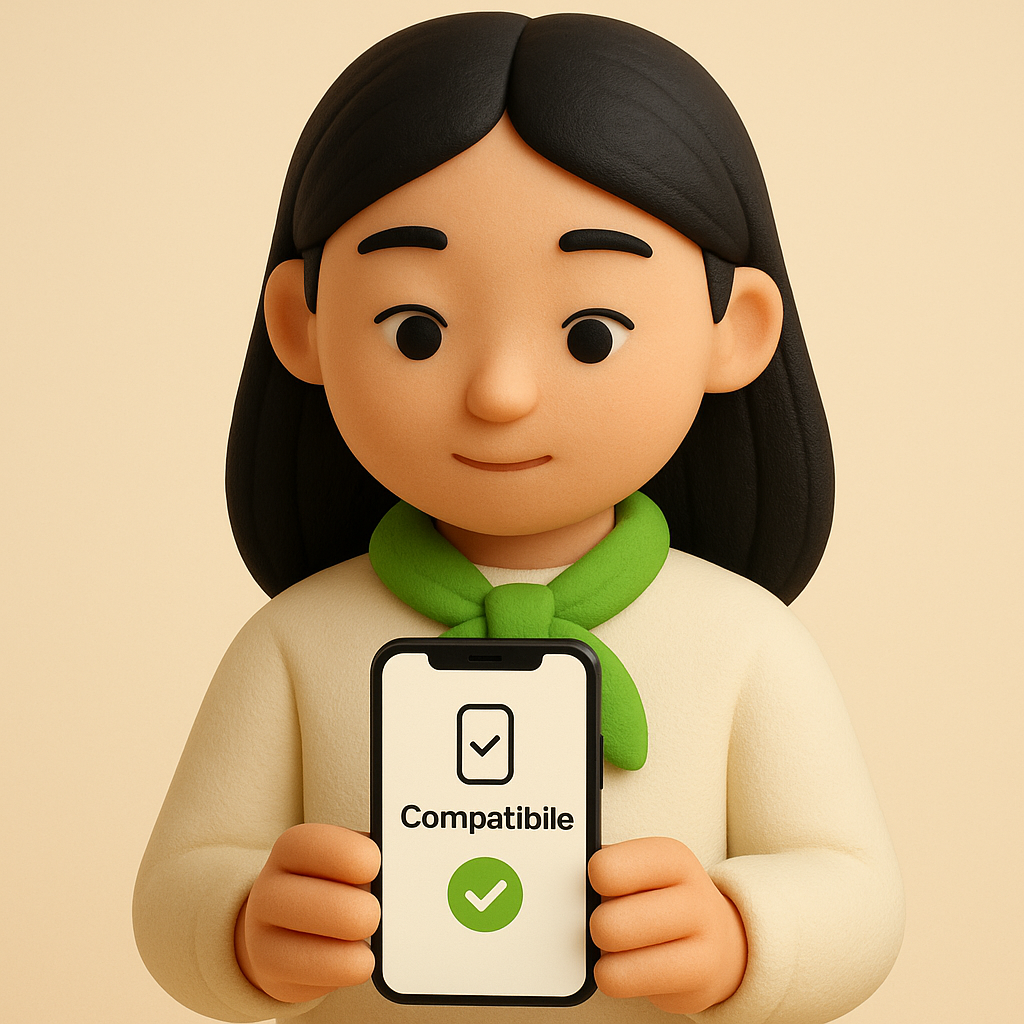
1
Check compatibility
Make sure your phone supports eSIM — most recent models do.
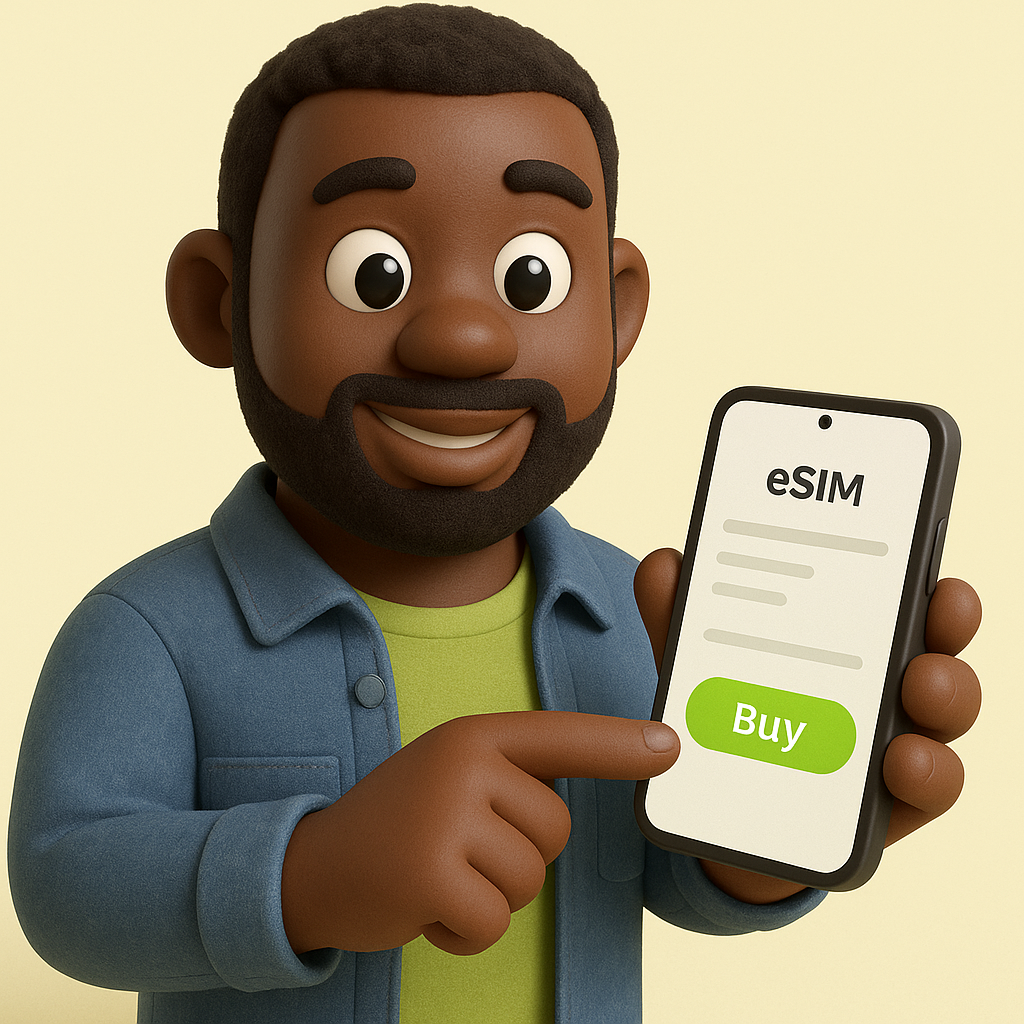
2
Buy your eSIM
Pick a plan and pay securely. Your QR code arrives by email in minutes.
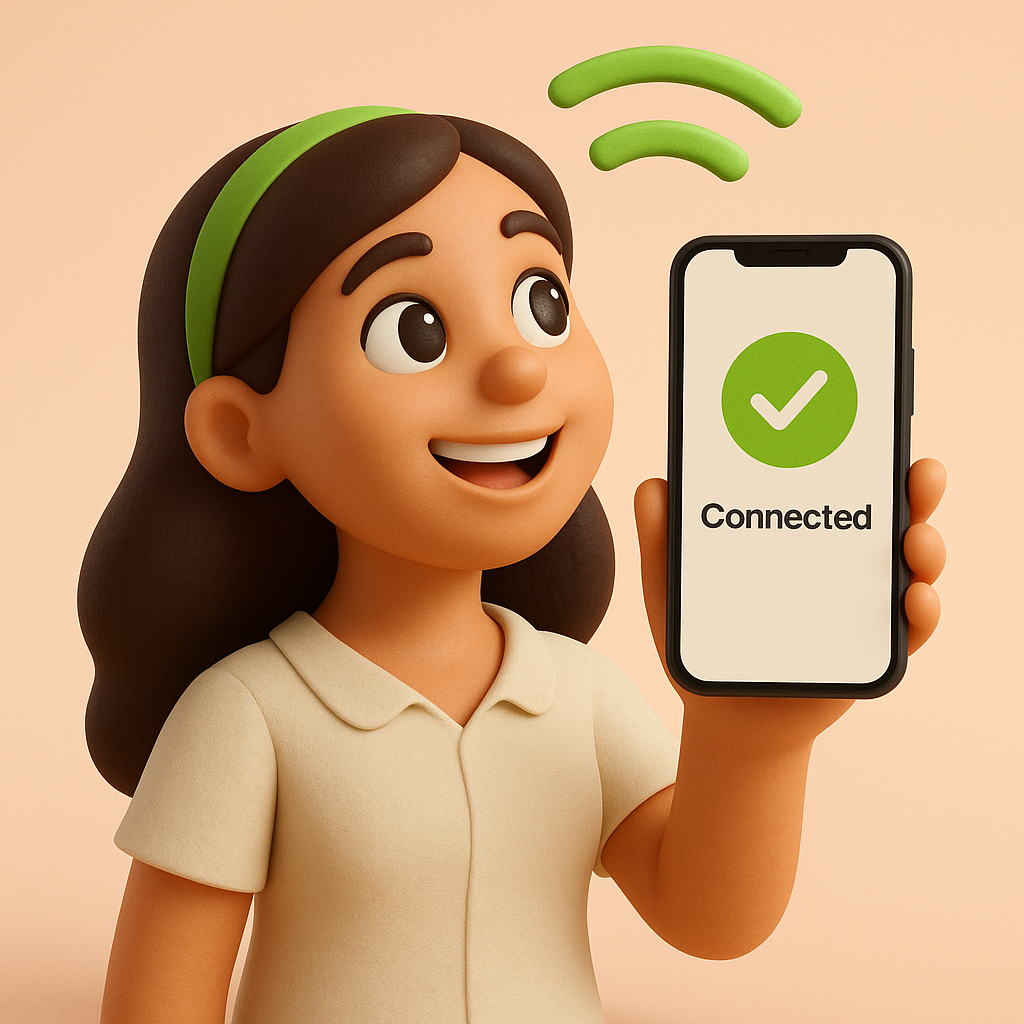
3
Scan & connect
Scan the QR code, enable data roaming on arrival, and you're online.
 WhatsApp +44 7367 063273