esima made my trip to Mongolia so much easier! The connection was seamless, and I was able to use the mobile data for video calls and group chats without any issues. I will definitely use this again on my next adventure!
JK
James K.
Manchester, GB · May 2026
Good Service Overall
The eSIM worked well for my trip, though I wish I'd bought the bigger data plan since I ran out a bit early. Customer service was helpful when I had a quick question!
AM
Ava M.
Melbourne, AU · May 2026
Seamless in Ulaanbaatar
I activated the eSIM as soon as I landed in Ulaanbaatar. Super easy QR scan and I was connected in seconds! Used it for Google Maps and communicating with local tour guides. Highly recommend for anyone traveling to Mongolia!
CR
Camila R.
Mexico City, MX · Apr 2026
Great for staying connected
Overall, the eSIM worked well for my trip. I loved being able to share photos with friends back home without worrying about roaming fees. I wish I had opted for the larger data plan, though — I used it all up while in Ulaanbaatar.
AK
Arjun K.
Bangalore, IN · Apr 2026
Reliable Connection Everywhere
From the moment I arrived in Mongolia, I had no issues with connectivity. This eSIM was perfect for navigating Ulaanbaatar and even made my trip to the Gobi Desert stress-free with easy access to maps!
HP
Hugo P.
Paris, FR · Apr 2026
Fantastic service and support
Absolutely loved my eSIM experience in Mongolia! I reached out to customer support with a quick question, and they replied promptly. I had no trouble using data for navigation and staying in touch with my travel group.
EG
Elena G.
Madrid, ES · Apr 2026
Perfect for My Trip
This eSIM was a lifesaver during my travels in Mongolia. The coverage was great in both the city and the countryside. I could easily share photos and stay updated on my group chats.
SM
Sarah M.
London, GB · Mar 2026
Super Easy Setup
I scanned the QR code as soon as I landed in Ulaanbaatar, and I was connected instantly! Used it for Google Maps and keeping in touch with friends. Highly recommend esima!
eSIM vs roaming in Mongolia
Typical home-carrier roaming
$10–$18
per day
Esima eSIM
$6.49
Flat rate
Most international carriers charge roaming rates that treat Mongolia as a premium-tier destination — expect throttling after the first gigabyte or two, and hotspot is often disabled entirely.
The daily cap resets at midnight in your home time zone, not Mongolian time, so you can burn through a day's allowance before lunch if you are eight or nine hours ahead.
Roaming bundles from major networks typically include Mongolia in their Asia-Pacific or global tiers, but the per-day cost stacks up fast on a two-week trip, and overage fees kick in the moment you exceed the bundle cap.
An eSIM gives you a flat data allowance at local-market pricing, hotspot enabled by default, and no surprise billing when you check your account back home. The trade-off: your home number will not ring unless you keep that SIM active in a dual-SIM phone or forward calls to a VoIP app.
Real trips, real travelers
Built for travelers like you
Different trip, same eSIM — here is how it lands for the most common visitors to Mongolia.
You board in Ulaanbaatar and ride east toward the Russian border or west toward China. The eSIM keeps you online in towns and aimag centres along the route, so you can message home, check train schedules, and stream music in the carriages. Russian and Chinese carriers do not roam free onto Mongolian networks, so the eSIM is the cheapest in-carriage option for the entire journey.
Trans-Mongolian rail traveler
You rent a 4x4 in Ulaanbaatar and drive south to Dalanzadgad, the Flaming Cliffs, and Khongoryn Els. The eSIM gives you 4G in Dalanzadgad for UB Cab-style local taxi bookings and QPay payments at guesthouses. Five kilometers into the dunes, signal drops to nothing — you downloaded offline maps and cached your podcasts in the city, so navigation and entertainment run without cellular.
Gobi Desert road-tripper
You book a week at a nomadic ger camp in Terelj, Khustai, or Khövsgöl. The camp office has one bar of 3G for evening WhatsApp calls home, and you use the eSIM to check weather forecasts and trail maps before daily hikes. Five kilometers out, signal disappears — you cached your music and work files in Ulaanbaatar, so the dead zone does not interrupt your trip.
Ger-camp visitor
Apps you'll need data for in Mongolia
The apps locals and travelers actually use — the ones that need real cell data, not just hotel Wi-Fi.
UB Cab
Rideshare in Ulaanbaatar — request rides, track drivers, process payments.
QPay
QR-payment standard in restaurants, shops, and markets across Ulaanbaatar.
Khan Bank
Mobile wallet and banking app — transfers, bill payments, account management.
Khas Bank
Mobile wallet and banking app — transfers, bill payments, QR payments.
Google Maps
Live navigation in Ulaanbaatar and offline maps for the Gobi and steppe.
Telegram
Shared minibus bookings and group chats for travel outside Ulaanbaatar.
How much data you'll burn per day
WhatsApp
~40 MB/day for chats and photo sharing, ~120 MB/day with voice calls, ~300 MB/day with video calls.
Maps
~5–10 MB/hour of live navigation in Ulaanbaatar; 20–40 MB/day on a Gobi road trip with continuous map use. Offline maps cut this to near zero.
Rideshare
~2–5 MB per UB Cab ride in Ulaanbaatar (app open, live tracking, payment). A week of daily rides uses about 50–100 MB total.
When you're travelling matters
Winter in Mongolia (November through March) brings temperatures below -20°C in Ulaanbaatar and -40°C in the countryside, and smartphone batteries drain faster in extreme cold. Keep your phone inside your jacket between uses, and carry a portable charger that works in sub-zero conditions.
Summer (June through August) is peak tourist season for ger camps and the Gobi — cellular congestion in Ulaanbaatar and Terelj can slow 5G speeds during morning and evening rush hours, though coverage footprint does not change.
Naadam Festival in mid-July draws crowds to Ulaanbaatar's central stadium and surrounding neighborhoods; expect slower data speeds near Sukhbaatar Square and the State Department Store during the three-day event.
FAQ
Frequently asked questions
Does the eSIM work in the Gobi Desert?
The Gobi has LTE-only coverage in and around Dalanzadgad, and signal drops to nothing in the dune fields and remote valleys. Download offline maps and cache any content you need before leaving the last town. Ger camps south of Dalanzadgad rarely have cellular service.
Does the eSIM work on the Trans-Mongolian Railway?
Yes, but coverage is variable along the route. You will have 4G or LTE in towns and aimag centres, and signal drops in the valleys and steppe between stops. Russian and Chinese carriers do not roam free onto Mongolian networks, so a Mongolian eSIM is the cheapest option for the entire journey.
Does the eSIM work in Terelj National Park?
Terelj village and the main tourist camps have one or two bars of 3G, sometimes 4G. Once you hike or drive five kilometers into the park, signal disappears. Download maps, music, and any work files before you leave Ulaanbaatar.
Does the eSIM work at Khövsgöl Lake?
Khatgal town and the lakeshore camps near the pier have one bar of 3G or 4G. Five kilometers out onto the lake or into the taiga forest, you lose signal entirely. Cache your content in Khatgal before heading to a remote ger camp.
How much data do I need for a week in Mongolia?
A week in Ulaanbaatar with daily UB Cab rides, restaurant QPay payments, and evening WhatsApp calls runs about 2–3 GB. Add another 1–2 GB if you are navigating to Terelj or the Gobi with live maps. If you download offline maps and music before leaving the city, 3 GB covers most travelers comfortably.
Can I make WhatsApp calls on this eSIM?
Yes. WhatsApp voice and video calls work on any data connection. In Ulaanbaatar you will have 5G or strong 4G, so call quality is clear. In the countryside and ger camps, you may drop to 3G or lose signal entirely — calls will cut out or fail to connect.
Does UB Cab work on this eSIM?
Yes. UB Cab is the dominant rideshare app in Ulaanbaatar and it needs live data to request rides, track drivers, and process payments. The eSIM gives you the same connectivity a local prepaid SIM would, so the app works exactly as it does for Mongolian users.
Mobicom or Unitel — which has better coverage in Ulaanbaatar?
Both carriers deliver 5G across central Ulaanbaatar and 4G in the ger districts. Mobicom has a slight edge in the northern hillside neighborhoods; Unitel is stronger around the State Department Store and Sukhbaatar Square. The eSIM hands off between both networks automatically, so you get whichever is stronger at your location.
Mobicom or Unitel — which is better for the Gobi?
Both carriers offer LTE-only coverage in Dalanzadgad and the main Gobi towns. Neither has consistent signal in the dune fields or remote valleys. The eSIM will connect to whichever network reaches your location, but expect long dead zones regardless of carrier once you leave the paved roads.
Does QPay work on this eSIM?
Yes. QPay is the dominant QR-payment standard in Ulaanbaatar restaurants, shops, and markets. The app needs live data to generate and scan payment codes, so the eSIM gives you the same functionality a local SIM would. Set up your account and link your card while you have strong signal in the city.
eSIM vs airport SIM in Mongolia — which is better?
An airport SIM from Mobicom or Unitel costs about the same as an eSIM and gives you identical network access, but you need to queue at the kiosk, hand over your passport for a photocopy, and swap your home SIM out. The eSIM installs in one tap before you land, so you walk straight out of arrivals with live data. For a short trip, the eSIM is faster; for a month-long journey, a physical SIM with unlimited top-ups may be cheaper.
Does the eSIM work in Erdenet?
Yes. Erdenet has 4G coverage from Mobicom and Unitel across the city centre and the mining district. Signal thins quickly on the roads north toward Bulgan and west toward the Selenge River. Download offline maps before leaving town if you are driving the northern loop.
Can I use the eSIM as a hotspot?
Yes. Hotspot is enabled by default on esima Mongolia eSIMs, so you can share data with a laptop, tablet, or a travel partner whose phone does not support eSIM. No throttling on the first few gigabytes like some Mongolian carrier bundles.
Does the eSIM work in the western Altai region?
The western Altai has LTE-only coverage in the main towns — Ölgii, Khovd — and signal drops to nothing in the mountain valleys and remote passes. Download offline maps and cache any content you need before leaving the last town with cellular service.
How much data does live navigation use in Mongolia?
Google Maps or Maps.me with live traffic and satellite view uses about 5–10 MB per hour of active navigation in Ulaanbaatar. On a road trip to Terelj or the Gobi, expect 20–40 MB per day if you keep the map open continuously. Download offline maps before leaving the city to cut that to near zero.
Need broader coverage?
Going further than Mongolia? These plans include Mongolia plus everywhere in between.
Mongolia runs on mobile apps more than you expect — UB Cab in Ulaanbaatar, QPay QR codes at every restaurant, Telegram groups to book shared minibuses to Terelj or Khövsgöl. A Mongolia eSIM connects you to Mobicom or Unitel the moment you land, so you skip the airport SIM counter, the passport photocopy, and the roaming charge your home carrier will bill for every tower ping across the steppe.
Choose your plan
8 options
Balanced use — social, navigation & light streaming
Choose number of eSIMs
How many travelers?
1 eSIM
Total$35.27
Secure payment
30-day guarantee
MobiCom CorporationLTE
Features
Data-only plan, no contract
Works on 4G LTE networks
Choose when your plan activates
Connects to top local carriers
No physical SIM swap needed
24/7 customer support
Description
Arrival with a Mongolia eSIM looks like this: you scan the QR code before your flight or during the descent into Chinggis Khaan International, the profile installs in one tap, and you land with live data. No queue at the Mobicom kiosk, no passport photocopy, no minimum top-up.
The eSIM registers on whichever network — Mobicom or Unitel — offers the stronger signal at your location, and it switches automatically as you move. In Ulaanbaatar that handoff is invisible; outside the city it can mean the difference between 4G and no service.
Installation is identical whether you are on iPhone (Settings → Cellular → Add eSIM) or Android (Settings → Network → SIM cards → Add eSIM). The profile activates the moment it detects a Mongolian tower, so you do not need to toggle anything manually.
Compared to a physical SIM from a local carrier, the eSIM saves you the trip to a Mobicom or Unitel shop and the need to swap your home SIM out — useful if you want to keep your primary number active for two-factor codes.
The trade-off: a physical SIM can be topped up at any convenience store with a scratch card; an eSIM top-up happens through the provider's app or website. For a one-week trip to Ulaanbaatar, Terelj, and the Gobi, most travelers find a fixed-data eSIM simpler than managing a prepaid account. For a month-long overland journey, a physical SIM with unlimited top-ups may be cheaper.
Technical specs
Network
MobiCom CorporationLTE
Coverage
Mongolia
Delivery
Immediate, by email
Plan type
Data only
Phone number
No
SMS / calls
VoIP apps only
Activation
QR code or manual SM-DP+
Why travelers choose Esima
Three reasons travelers pick esima for Mongolia. First: pricing mirrors local prepaid rates, not the roaming markup your home network applies to Mongolian towers.
Second: the eSIM hands off between Mobicom and Unitel automatically, so you get the strongest signal in Ulaanbaatar's city centre rather than one carrier's coverage gap. Third: hotspot is enabled by default — important if you are traveling with a laptop or sharing data with a partner whose phone does not support eSIM. No throttling on the first few gigabytes like some Mongolian carrier bundles.
Instant delivery
Your QR code lands in your inbox minutes after purchase.
No roaming bills
Pay one upfront price — no surprise charges abroad.
Keep your number
Your physical SIM stays active for calls and texts.
Fast 4G/5G
Connect to top-rated local networks at full speed.
24/7 support
Real humans ready to help, any time zone, any day.
Easy install
Scan once and you're online — no app, no SIM swap.
Coverage in Mongolia
Our Mongolia eSIMs run on the Mobicom and Unitel networks. Both deliver 5G across Ulaanbaatar and 4G in most aimag centres — Erdenet, Darkhan, and the provincial capitals along the Trans-Mongolian Railway corridor.
The Gobi Desert south of Dalanzadgad and the western Altai region are LTE-only at best, and the open steppe between towns can go signal-dead for an hour or more. Nomadic ger camps in Khustai National Park, Terelj, and Khövsgöl Lake typically have one bar of 3G at the camp office and nothing five kilometers out.
Download offline maps, podcasts, and any work files before you leave the city. Trans-Mongolian Railway carriages have variable cellular along the route; Russian and Chinese carriers do not roam onto Mongolian networks free of charge, so a Mongolian eSIM is the cheapest in-carriage option.
Network
MobiCom CorporationLTE
Good to know
Download offline maps for the Gobi and western Altai before you leave Ulaanbaatar — both regions are LTE-only at best and the steppe has long signal-dead stretches.
Ger camps in Terelj, Khustai, and Khövsgöl typically have one bar of 3G at the office and nothing five kilometers out — cache your podcasts and work files in the city.
QPay is the dominant QR-payment standard in Ulaanbaatar restaurants and shops; the app needs live data to generate and scan codes.
UB Cab is the main rideshare in Ulaanbaatar; outside the capital, shared minibuses run on Telegram group bookings — join the relevant chat before your trip.
Trans-Mongolian Railway carriages have variable cellular; Russian and Chinese carriers do not roam free onto Mongolian networks, so a Mongolian eSIM is the cheapest in-route option.
Khan Bank and Khas Bank apps are the leading mobile wallets — both require SMS verification on first login, so set them up while you have signal in Ulaanbaatar.
Coverage in Mongolia — top cities
Ulaanbaatar
Ulaanbaatar is blanketed in 5G from Mobicom and Unitel — you will pull 80+ Mbps in Sukhbaatar Square, the State Department Store, and most hotels. Coverage holds inside the Gandan Monastery and the National Museum. The ger districts on the hillsides have spottier service; expect 4G or high-band LTE rather than 5G once you climb above the main roads.
Erdenet
Erdenet runs on 4G from both carriers across the city centre and the mining district. The Erdenet Mining Corporation campus has strong indoor signal. Coverage thins quickly on the road north toward Bulgan — download maps and music before you leave town if you are driving the northern loop.
Khövsgöl
Khövsgöl Lake's tourist camps and the town of Khatgal have one or two bars of 3G, sometimes 4G at the Khatgal pier. Five kilometers out onto the lake or into the taiga forest, you lose signal entirely. Plan content downloads in Khatgal before heading to a ger camp, and do not rely on live navigation once you leave the main track.
How to set up your eSIM
1
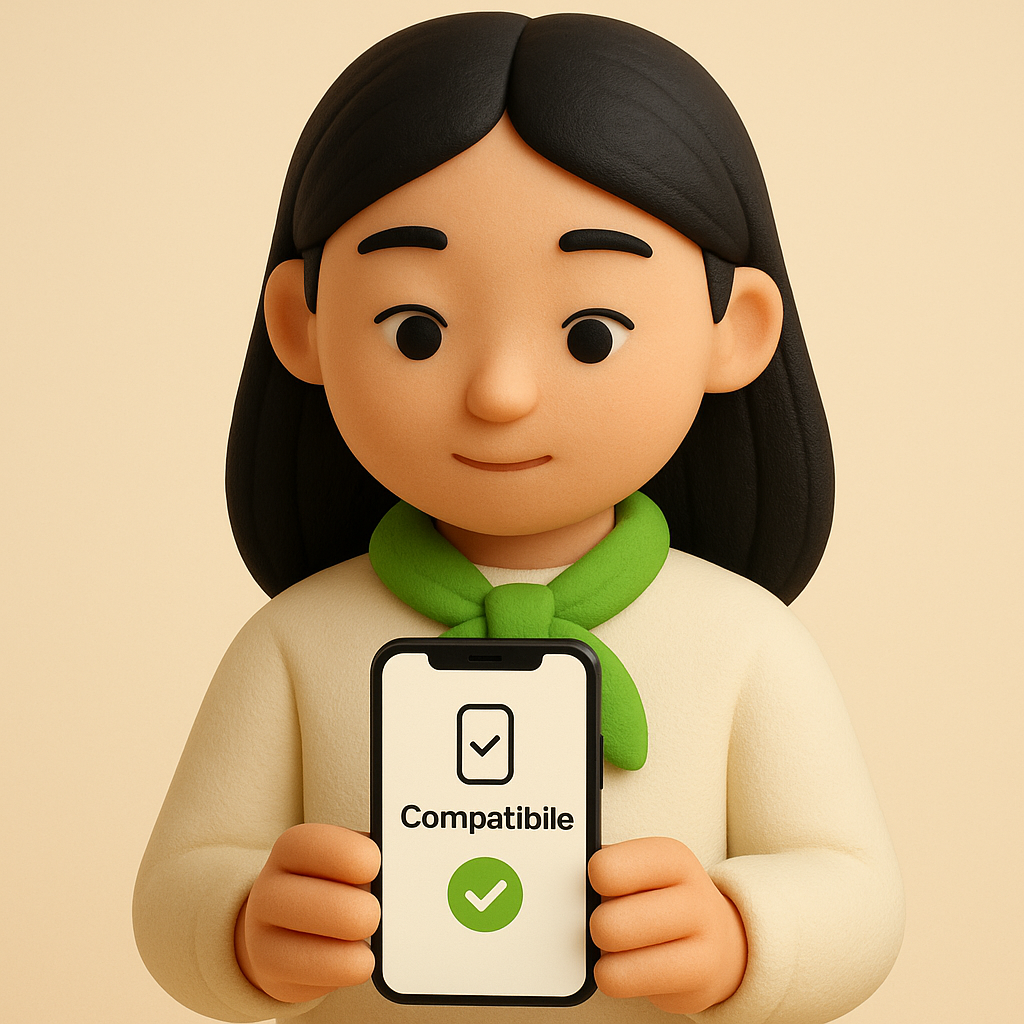
Check compatibility
Make sure your phone supports eSIM — most recent models do.
2
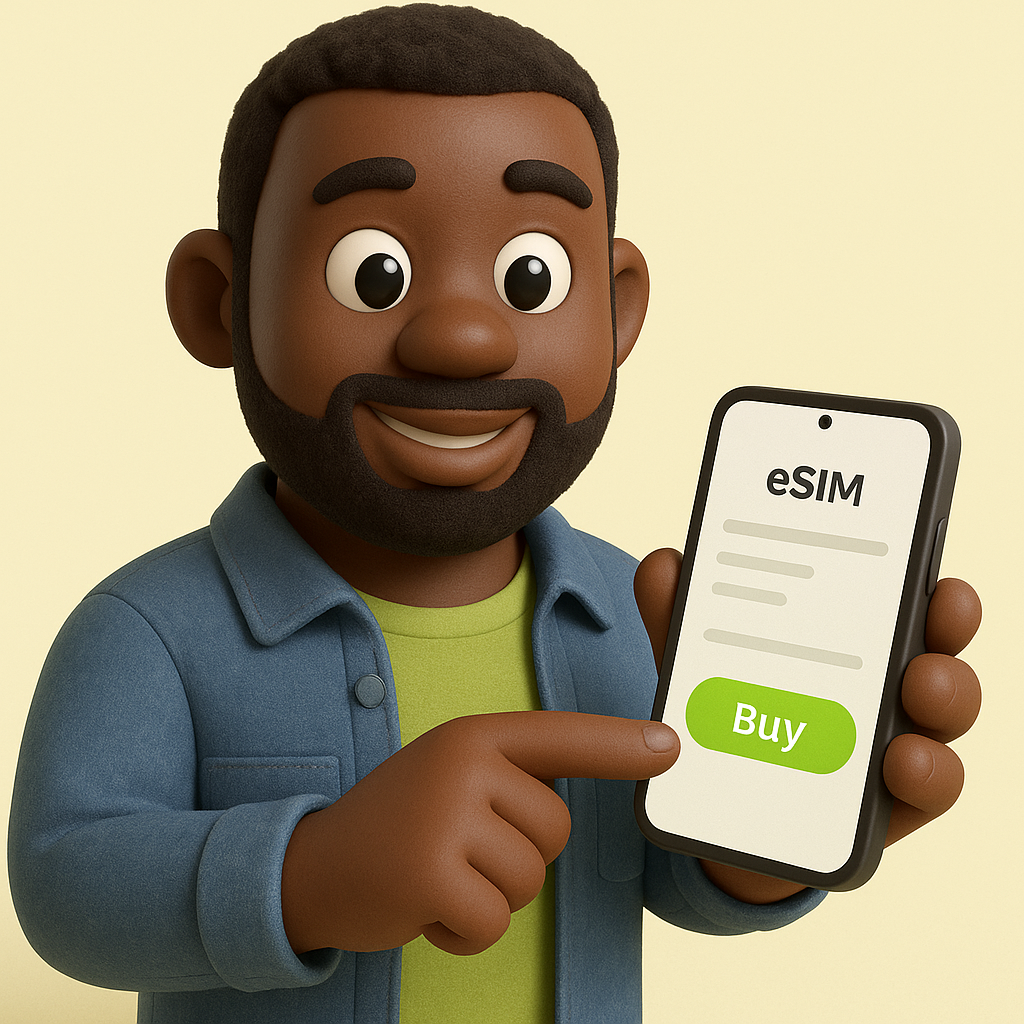
Buy your eSIM
Pick a plan and pay securely. Your QR code arrives by email in minutes.
3
Scan & connect
Scan the QR code, enable data roaming on arrival, and you're online.
 WhatsApp +44 7367 063273