WhatsApp +44 7367 063273
Camila R.
Mexico City, MX · Jun 2026
Super easy setup
Setting up my eSIM was a breeze! Just received the email, scanned the QR code, and I was connected within minutes. Perfect for navigating through Granada and posting updates on social media!
53 verified reviews
Based on 53 reviews
Camila R.
Mexico City, MX · Jun 2026
Setting up my eSIM was a breeze! Just received the email, scanned the QR code, and I was connected within minutes. Perfect for navigating through Granada and posting updates on social media!
Anna V.
Amsterdam, NL · May 2026
esima was a lifesaver! The installation was quick, and I had no issues with connectivity while visiting the beautiful beaches of San Juan del Sur. I loved being able to back up photos and share my adventures instantly.
Aoife N.
Cork, IE · May 2026
The eSIM was reliable during my stay, allowing me to stay connected while exploring Granada. I would have loved a bigger data option, though, as I ran out towards the end.
Jessica L.
New York, US · Apr 2026
The eSIM worked perfectly throughout my trip in Nicaragua. I was able to navigate with Google Maps and share photos in group chats without any issues. Setup was a breeze with the QR code!
Aoife N.
Cork, IE · Apr 2026
Installing my esima eSIM was a breeze. I was exploring Leon within minutes and loved staying connected. Customer support was quick to respond when I had a question too!
Michael R.
Los Angeles, US · Apr 2026
I can't recommend this enough! The eSIM from esima kept me connected everywhere in Nicaragua. I even managed to FaceTime my family from the beach!
Lucas O.
São Paulo, BR · Apr 2026
I was worried about staying connected while exploring Nicaragua, but esima made it so simple! Scanned the QR code at the airport, and I was good to go. Used Google Maps constantly and even shared photos with friends back home.
David H.
Chicago, US · Apr 2026
Using the esima eSIM during my trip to Nicaragua was a great experience overall. It was easy to set up, and I could rely on it for maps and messaging. Just wish I had a bit more flexibility with data plan choices.
Typical home-carrier roaming
$10–$20
per day
Esima eSIM
$8.49
Flat rate
International roaming in Nicaragua typically costs your home carrier between ten and twenty dollars per day, and most roaming bundles throttle speeds after the first gigabyte or two — fine for WhatsApp text, painful for loading a map of Granada's one-way streets or uploading a sunset photo from San Juan del Sur.
Hotspot is often blocked or costs extra on roaming plans, which matters if you are traveling with a laptop or sharing data with a partner. The eSIM gives you a flat price for the entire trip, no daily surprises, and full hotspot access from day one.
You also avoid the carrier lock-in: roaming forces you onto whichever local network your home operator has a wholesale deal with, while the eSIM hands off between Claro and Tigo to grab the stronger signal in each location.
Different trip, same eSIM — here is how it lands for the most common visitors to Nicaragua.
You are bouncing between Masaya's lava lake, Mombacho's cloud-forest trails, and Ometepe's twin cones. The eSIM gives you 4G at the Masaya visitor centre to refresh live activity alerts before a night tour, reliable maps for the Mombacho access road, and 3G on Ometepe for WhatsApp coordination with your hostel. Download offline maps before the ferry.
Volcano-chaser
You are chasing swells between San Juan del Sur, Playa Maderas, and Playa Hermosa. The eSIM keeps you connected in town for surf-report apps and hostel WhatsApp groups, but coverage thins on the dirt roads to the breaks. Download offline maps and tide charts before leaving the beachfront, and use the 4G in town to upload session photos each evening.
Surf-trip planner
You are spending a week between Granada and León, with day trips to Masaya and the Isletas. The eSIM delivers 4G in both cities for live navigation through one-way streets, WhatsApp bookings for boat tours, and café work sessions. Signal holds at Mombacho and Masaya visitor centres, so you can refresh alerts and upload photos without hunting for Wi-Fi.
Colonial-town hopper
The apps locals and travelers actually use — the ones that need real cell data, not just hotel Wi-Fi.

Primary contact method for hostels, shuttles, tour operators, and restaurant orders
Google Maps
Live navigation through Granada's one-way streets and dirt roads to surf breaks

Waze
Real-time traffic and road conditions on the Pan-American Highway

Uber
Limited rideshare in Managua only; not available in other cities

Windy
Surf and weather forecasts for San Juan del Sur and the Pacific coast

Maps.me
Offline maps for Ometepe and northern highlands where 3G is slow
~50 MB/day for text chats and photo sharing, ~150 MB/day if you add frequent voice calls to hostels and tour operators.
Maps
5–10 MB/hour for live navigation; a full day of driving Managua–Granada–San Juan del Sur uses 50–80 MB. Download offline maps for Ometepe.
Rideshare
Uber exists only in Managua and uses ~2–5 MB per ride for live tracking. Elsewhere, taxis are pre-booked via WhatsApp, which adds minimal data.
Nicaragua's rainy season runs May through November, with September and October seeing the heaviest downpours. Road conditions deteriorate on the dirt routes to Playa Maderas and in the northern highlands, and cellular towers can lose power during storms — download offline maps and cache any critical documents before heading into rural areas.
The dry season (December through April) brings more stable connectivity and easier travel, but also higher tourist volumes in Granada and San Juan del Sur, which can congest cell towers during peak hours.
Yes, but expect mostly 3G. Claro and Tigo both have patchy 4G near Moyogalpa, the main ferry dock, but signal thins and drops to 3G as you ride toward Concepción and Maderas volcanoes. Download offline maps and any large files before the ferry crossing.
The Masaya visitor centre has 4G on both Claro and Tigo, so you can refresh live volcanic-activity alerts before a night tour. Signal weakens near the crater rim but is strong enough for a quick WhatsApp message or photo upload from the parking area.
Yes. San Juan del Sur town centre and the beachfront have full 4G. Coverage thins on the dirt roads to Playa Maderas and Playa Hermosa — download offline maps before heading to the surf breaks. No rideshare apps operate here; taxis are pre-booked or flagged on the street.
Three to five gigabytes covers most travelers. WhatsApp chats and voice calls use roughly 50–150 MB per day. Google Maps in live-navigation mode burns 5–10 MB per hour. If you are uploading photos from Granada or streaming music on a chicken-bus ride, add another gigabyte. Ometepe's 3G speeds make large uploads slow.
Yes. WhatsApp voice and video calls work on both Claro and Tigo's networks across Managua, Granada, León and San Juan del Sur. On Ometepe, 3G speeds handle voice calls but video may stutter. The Río San Juan has weak cellular, so calls will drop on boat trips.
Both Claro Nicaragua and Tigo Nicaragua deliver 4G in Granada's colonial centre and along the lakeshore. Claro tends to be slightly stronger inside thick-walled guesthouses, but the eSIM hands off between them automatically, so you get whichever signal is stronger at your location without manual switching.
Cellular coverage is weak to nonexistent on Río San Juan boat trips from San Carlos toward Los Guatuzos and the Caribbean coast. Guides use VHF radio for communication, not cell towers. Download offline maps and any needed documents before departure.
Rideshare apps exist in Managua but are not as widespread as in other Central American capitals. The eSIM provides the data you need to open the app, but most travelers find pre-booked taxis through their hotel or the official airport shuttle more reliable. Outside Managua, rideshare does not operate.
Most tourist-facing venues in Nicaragua accept USD cash or card; local mobile-payment apps are less common for travelers. The eSIM gives you data for WhatsApp confirmations and map lookups, which cover the majority of on-the-ground needs. If you do set up a Nicaraguan banking app, it will work over the eSIM's data connection.
An airport SIM from Claro costs around 200–300 córdobas and requires a passport photocopy and a wait at the kiosk. The eSIM installs before you leave home, connects the moment you land, and hands off between Claro and Tigo for better coverage across regions. If you value time over saving a couple of dollars, the eSIM wins.
Yes. León has full 4G coverage on both Claro and Tigo across the colonial centre, the cathedral district, and the main market. Signal holds along the road to Las Peñitas beach. The eSIM will hand off to whichever carrier is stronger in your guesthouse or café.
Live navigation burns 5–10 MB per hour. A day of driving from Managua to Granada to San Juan del Sur uses roughly 50–80 MB. Download offline maps for Ometepe and the northern highlands before you leave a 4G zone to save data and avoid slow 3G loading.
Yes. Hotspot is enabled by default on esima eSIMs for Nicaragua, with no throttling on the first several gigabytes. Useful if you are working remotely from a Granada café or sharing data with a travel partner whose phone does not support eSIM.
Estelí town has 4G, but coverage dies fast once you leave the main settlement. The mountain roads toward Miraflor and the Honduran border are mostly dead zones. Download offline maps and any needed documents before heading into the highlands.
Yes. San Juan del Sur's beachfront has 4G that handles photo uploads to Instagram or cloud storage. Expect slower speeds on the dirt roads to Playa Maderas — upload from town before heading to the surf breaks if you are on a tight schedule.
Going further than Nicaragua? These plans include Nicaragua plus everywhere in between.
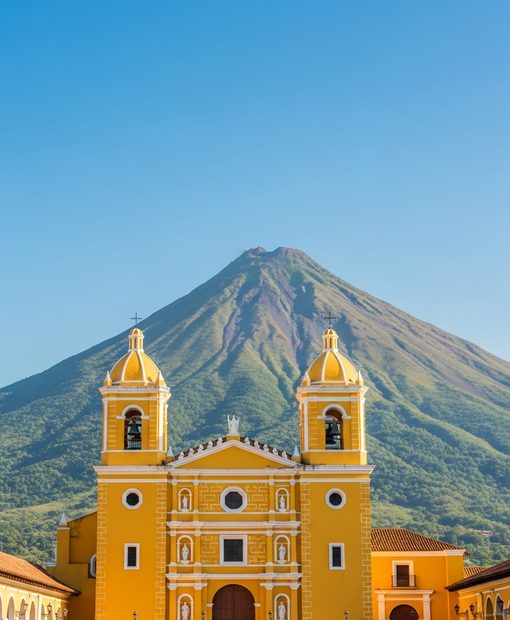
Nicaragua runs on WhatsApp for everything — hostel confirmations, shuttle bookings, volcano-tour updates, even menu orders at beach-shack restaurants in San Juan del Sur.
A Nicaragua eSIM drops you straight onto Claro or Tigo's local network the moment you land in Managua, so you skip the airport SIM counter, the passport photocopy, and the $15-per-day roaming charge your home carrier will try to bill. One QR scan before you board, you are online when the wheels touch down.
Balanced use — social, navigation & light streaming
How many travelers?
Landing at Augusto C. Sandino International in Managua, your eSIM connects to Claro or Tigo within seconds — no queue at the Claro kiosk, no hunting for a convenience store that sells top-ups.
Installation happens before you leave home: scan the QR code esima emails, confirm the cellular plan in settings, done.
The eSIM behaves like a local SIM across Nicaragua's main travel corridor — Managua, Granada, León, San Juan del Sur — with 4G that handles maps, rideshare in the capital, and the constant stream of WhatsApp messages that replace email here.
The difference from a physical SIM is carrier flexibility: if Tigo is weak inside your Granada guesthouse courtyard, the eSIM can hand off to Claro without you swapping anything. On Ometepe, expect 3G most of the time; 4G appears near the ferry dock in Moyogalpa but fades as you ride toward the volcanoes.
The Río San Juan and Caribbean coast are fringe zones — cellular is sparse, and boat operators rely on radio. USD is accepted at most tourist venues alongside córdobas, so you will not need a local banking app for small purchases.
No major rideshare outside Managua; San Juan del Sur and Granada run on pre-booked taxis and hostel shuttles, which need a WhatsApp message but no live tracking. Chicken buses (repurposed US school buses) dominate intercity transit and require zero data — you flag them down, pay the conductor in cash, and ride.
Three reasons travelers pick esima for Nicaragua. First: pricing mirrors what a local prepaid customer pays, not what international roaming departments charge for the same tower.
Second: the eSIM hands off between Claro Nicaragua and Tigo Nicaragua automatically, so you get the stronger signal in León's colonial centre rather than being locked to one carrier's weak spot.
Third: hotspot is enabled by default — useful if you are traveling with a laptop for remote work in Granada or sharing data with a partner whose phone does not support eSIM. No throttling on the first few gigabytes like some local bundles.
Your QR code lands in your inbox minutes after purchase.
Pay one upfront price — no surprise charges abroad.
Your physical SIM stays active for calls and texts.
Connect to top-rated local networks at full speed.
Real humans ready to help, any time zone, any day.
Scan once and you're online — no app, no SIM swap.
Our Nicaragua eSIMs run on Claro Nicaragua and Tigo Nicaragua. Both carriers deliver 4G across Managua, León, Granada and San Juan del Sur — expect reliable speeds in the city centres and along the Pan-American Highway corridor.
Ometepe Island is mostly 3G, with patchy 4G near Moyogalpa; signal thins as you climb toward Concepción and Maderas volcanoes. Río San Juan boat trips from San Carlos toward Los Guatuzos and the Caribbean coast have weak cellular — guides use VHF radio, not cell towers.
Mombacho and Masaya volcano visitor centres have 4G; refreshing live volcanic-activity alerts before a Masaya night tour is straightforward. Coverage dies fast in the northern highlands around Estelí and Matagalpa once you leave the main towns.
Network
Make sure your phone supports eSIM — most recent models do.
Pick a plan and pay securely. Your QR code arrives by email in minutes.
Scan the QR code, enable data roaming on arrival, and you're online.