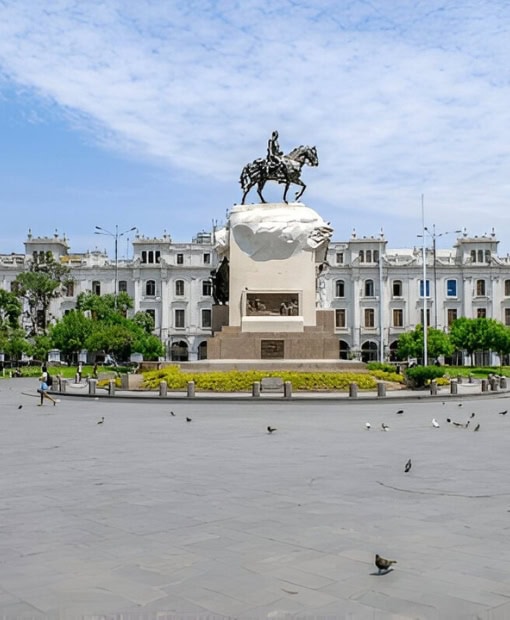
From the moment I landed in Lima, my esima eSIM was ready to go! Scanning the QR code was quick, and I was impressed with the streaming quality while exploring the Sacred Valley. Fantastic service for travelers!
PS
Priya S.
Mumbai, IN · May 2026
Great overall experience
The eSIM made my travels around Peru so much easier. Quick setup using QR scan and reliable 4G speeds in most places. Just a minor slowdown in some remote regions, but otherwise very satisfied!
HP
Hugo P.
Paris, FR · May 2026
Total lifesaver in Peru!
I relied on esima for data while exploring Lima, Arequipa, and beyond. The speeds were great for video calls and streaming Netflix. Definitely worth it!
JK
James K.
Manchester, GB · May 2026
Perfect for my Peru adventure
The esima eSIM worked flawlessly throughout my trip in Peru. I just scanned the QR code at the airport, and I was online within minutes. The 4G speed was excellent for streaming shows and navigating through the cities!
MH
Megan H.
Cape Town, ZA · May 2026
Perfect for Lima
The eSIM worked flawlessly in Lima. I loved streaming Netflix in my hotel room without any buffering. Installation took less than 30 seconds!
AV
Anna V.
Amsterdam, NL · May 2026
Instant Connection in Cusco
I landed in Cusco and set up my esima eSIM in under a minute by scanning the QR code. The 4G speed was fantastic for navigating and sharing photos. Highly recommend for anyone traveling to Peru!
JK
James K.
Manchester, GB · May 2026
Reliable in the Andes
I traveled through various regions in Peru, including Cusco and Machu Picchu. The eSIM from esima worked flawlessly throughout my trip. The 4G speed was fast enough to stream videos and upload photos without any issues. Installation was a breeze with the QR code scan!
MD
Marco D.
Rome, IT · May 2026
Great coverage in most places
Used esima throughout Peru, including Cusco and the Sacred Valley. Only experienced slow speeds in some remote areas, but generally reliable for staying connected.
eSIM vs roaming in Peru
Typical home-carrier roaming
$10–$18
per day
Esima eSIM
$3.43
Flat rate
Most international carriers charge per-day roaming fees for Peru, and those daily caps typically include a data allowance that throttles after the first gigabyte or two — fine for WhatsApp, painful for live navigation on a long bus ride from Lima to Paracas.
Hotspot is often disabled or costs extra on roaming plans, so you cannot share connectivity with a travel partner or a laptop. The eSIM gives you a flat data pool at local prepaid rates, no throttling after an arbitrary threshold, and hotspot enabled by default.
If you are moving between Lima, Cusco, and Arequipa over a week, the roaming bill compounds daily; the eSIM cost stays fixed regardless of how many days you stay connected.
Roaming also locks you to whichever Peruvian carrier your home network has a wholesale agreement with — often not the carrier with the best coverage in the Sacred Valley or along the coast.
Real trips, real travelers
Built for travelers like you
Different trip, same eSIM — here is how it lands for the most common visitors to Peru.
You hike the Inca Trail for four days off-grid, then arrive in Aguas Calientes with 4G from Claro. The eSIM lets you message your Cusco hostel, upload trail photos, and book the return train ticket — all before you queue for the bus up to the ruins.
Sacred Valley trekker
You drive the Panamericana Sur from Lima to Paracas, Ica, and Nazca. The eSIM holds LTE the entire route, so you track real-time traffic through Cañete, book a last-minute Ballestas Islands boat tour in Paracas, and navigate detours around roadwork near Ica without losing signal.
Coastal road-tripper
You land at Jorge Chávez for a two-day conference in San Isidro. The eSIM connects you to 5G before you clear customs, so you confirm your Uber, join the hotel Wi-Fi via SMS code, and hotspot your laptop for the ride to Miraflores — no SIM kiosk, no roaming bill.
Lima business stopover
Apps you'll need data for in Peru
The apps locals and travelers actually use — the ones that need real cell data, not just hotel Wi-Fi.
Uber
Rideshare in Lima, Cusco, Arequipa
FreeNow
Rideshare alternative, common in Lima
Rappi
Food delivery and groceries in major cities
PedidosYa
Food delivery, strong in Miraflores and Cusco
M
Metropolitano BRT app
Real-time bus tracking for Lima's BRT
Yape
Mobile payments and transfers, BCP-backed
Google Maps
Navigation and offline maps for treks
Maps.me
Offline maps for Inca Trail and remote areas
How much data you'll burn per day
WhatsApp
~40MB/day for text and photos, ~120MB/day with voice calls to hostels and tour operators.
Maps
100–200MB/day for live navigation between cities or rideshare in Lima and Cusco; less on long highway stretches.
Rideshare
~5MB per ride for Uber or FreeNow in Lima, Cusco, or Arequipa; ~15MB/day if you take three or four rides.
When you're travelling matters
June through August is dry season in the Andes — the Inca Trail, Colca Canyon, and Lake Titicaca see peak trekker traffic, and Cusco's hostels and tour operators rely heavily on WhatsApp for last-minute bookings and trail updates.
December through March is rainy season; the Inca Trail closes in February for maintenance, and landslides on the Panamericana Sur and the Sacred Valley roads can cut connectivity for hours when towers lose power.
If you are trekking in rainy season, download offline maps and permits before you leave Cusco — repair crews can take a day or more to restore service after a slide.
FAQ
Frequently asked questions
Does eSIM work at Machu Picchu?
Aguas Calientes (Machu Picchu Pueblo) has 4G from Claro and Movistar. The ruins themselves have no signal above the entrance gate — the terraces, Temple of the Sun, and Huayna Picchu summit are all off-grid. Download maps and take photos; upload them when you return to the village.
Does eSIM work on the Inca Trail?
No. The Inca Trail from Kilometer 82 to Inti Punku is four days completely off-grid on every Peruvian carrier. Download offline maps, permits, and any trail guides before you start. You will regain signal when you reach Aguas Calientes.
How much data do I need for a week in Peru?
Budget 3–5GB for a week if you use maps daily, rideshare in Lima and Cusco, and WhatsApp for hostel coordination. Add 1–2GB if you upload photos or use video calls. Multi-day treks like the Inca Trail use zero data because you are off-grid for days.
Does eSIM work on Lake Titicaca's islands?
The Uros floating islands near Puno have weak 3G from Movistar — enough for WhatsApp text but slow for photos. Taquile and Amantani islands, where most overnight homestays are, have no signal. Plan to be offline if you stay the night.
Can I use Uber in Lima with this eSIM?
Yes. Uber, Cabify, and FreeNow all work on the eSIM in Lima, Cusco, and Arequipa. The apps need live data to request rides and track drivers. InDrive is also common in Lima and often cheaper than Uber for longer trips to the airport.
Claro vs Movistar coverage in Cusco?
Claro has better coverage in the Sacred Valley — Ollantaytambo, Pisac, and the train route to Machu Picchu all run on Claro towers. Movistar works well in Cusco's Plaza de Armas but weakens in San Blas and the valley. If you are spending time in the Sacred Valley, Claro is the stronger choice.
Does the Lima Metropolitano BRT app work on this eSIM?
Yes. The official Metropolitano app needs live data for real-time bus tracking — critical to avoid long waits at peak hours. The contactless card itself works offline, but the app is the only way to see when the next bus actually arrives.
Does eSIM work in Colca Canyon?
Chivay and Yanque lodges have 4G from Claro and Movistar. The canyon floor and the Cruz del Cóndor condor viewpoint lose signal entirely. If you are hiking down to the river or driving the rim between villages, expect dead zones — download maps before you leave Arequipa.
Can I make WhatsApp calls in Peru on this eSIM?
Yes. WhatsApp voice and video calls work on the eSIM anywhere you have 4G or LTE — Lima, Cusco, Arequipa, and the coastal highway. Calls will drop in off-grid zones like the Inca Trail, Huayna Picchu, and the Colca Canyon floor.
Does eSIM work on the Panamericana Sur to Nazca?
Yes. The Panamericana Sur from Lima to Paracas and Nazca has continuous LTE from Claro and Movistar. The Nazca Lines overflight airstrips are off-grid, so book flights in advance and do not rely on last-minute online booking once you arrive at the airstrip.
eSIM vs buying a SIM at Lima airport?
A physical SIM from Claro or Movistar at Jorge Chávez requires a passport scan, a minimum 20-sol top-up, and a queue that can stretch 30 minutes during peak arrivals. The eSIM activates the moment you land, costs the same or less, and skips the paperwork. Coverage is identical because both use the same networks.
Does Rappi work on this eSIM in Lima?
Yes. Rappi (food delivery and groceries) works on the eSIM in Lima, Arequipa, and Cusco. The app needs live data to place orders and track couriers. PedidosYa is also common in Lima and sometimes has better restaurant selection in Miraflores.
Does eSIM work in Arequipa's historic center?
Yes. The Plaza de Armas, Santa Catalina Monastery, and Yanahuara viewpoint all have strong 4G from Claro, Movistar, and Entel. Coverage holds in the city center and most of Yanahuara; it thins in the hills above Cayma and toward the outskirts.
How much data does Google Maps use per day in Peru?
Expect 100–200MB per day for live navigation if you are moving between cities or using rideshare in Lima and Cusco. Long drives on the Panamericana or multi-day treks use less because you download the route once. Offline maps cut usage to near zero but lose real-time traffic and detours.
Does eSIM work in Puno?
Yes. Puno city has 4G from Claro and Movistar. The lakeshore and boat docks to the Uros islands have weak 3G from Movistar. Taquile and Amantani islands, where overnight homestays are common, have no signal — plan to be offline if you stay the night.
Need broader coverage?
Going further than Peru? These plans include Peru plus everywhere in between.
Peru runs on apps — rideshare to the airport, WhatsApp for hostel check-in, real-time bus tracking on Lima's Metropolitano BRT, and that one map layer showing which Cusco streets are closed for processions. A Peru travel eSIM drops you onto Claro or Movistar's local network before you clear immigration, so you skip the Jorge Chávez SIM counter, the passport photocopy, and the roaming bill that charges you twice what a local prepaid plan costs.
Choose your plan
8 options
Balanced use — social, navigation & light streaming
Choose number of eSIMs
How many travelers?
1 eSIM
Total$16.88
Secure payment
30-day guarantee
Movistar Peru5G
Features
Data-only plan, no contract
Works on 5G / 4G LTE networks
Choose when your plan activates
Connects to top local carriers
No physical SIM swap needed
24/7 customer support
Description
Landing at Jorge Chávez, your eSIM connects to Claro or Entel's Lima network within seconds — no queue at the Claro kiosk, no passport scan, no minimum top-up. Installation happens before you board: scan the QR code esima emails you, label the line 'Peru', toggle it on when the wheels touch down.
The eSIM behaves like a local Peruvian SIM in every technical sense — it registers on the same towers, uses the same APN, and supports the same LTE bands a Lima resident's phone would use.
The difference is administrative: no physical card to swap, no need to eject your home SIM, and no risk of losing a tiny plastic chip in a hostel bunk. Coverage quality shifts dramatically by region.
Lima, Arequipa, and Cusco city centers are dense with 4G; the Sacred Valley and Machu Picchu village (Aguas Calientes) hold 4G until you climb above the ruins. The Inca Trail itself — all four days from Kilometer 82 to Inti Punku — is completely off-grid, as is Huayna Picchu summit.
Lake Titicaca's shoreline has patchy 3G; the floating islands and overnight homestays on Taquile are offline. The coastal Panamericana holds LTE from Lima to Nazca, but the moment you turn inland toward the Andes, expect long stretches of no signal until the next valley town.
A local physical SIM from Claro or Movistar offers identical coverage but requires an in-person purchase, passport registration, and a minimum 20-sol top-up; the eSIM skips all three and activates the moment you need it.
Technical specs
Network
Movistar Peru5G
Coverage
Peru
Delivery
Immediate, by email
Plan type
Data only
Phone number
No
SMS / calls
VoIP apps only
Activation
QR code or manual SM-DP+
Why travelers choose Esima
Three reasons travelers pick esima for Peru. First: pricing mirrors local prepaid rates, not the international roaming markup your home carrier applies to Peruvian towers.
Second: the eSIM hands off between Claro Peru, Movistar Peru, and Entel Peru automatically, so you get the strongest signal in Arequipa's Plaza de Armas rather than one carrier's weak spot.
Third: hotspot is enabled by default — critical if you are traveling with a laptop, a tablet, or a companion whose phone does not support eSIM. No throttling after the first gigabyte like some Peruvian carrier bundles impose.
Instant delivery
Your QR code lands in your inbox minutes after purchase.
No roaming bills
Pay one upfront price — no surprise charges abroad.
Keep your number
Your physical SIM stays active for calls and texts.
Fast 4G/5G
Connect to top-rated local networks at full speed.
24/7 support
Real humans ready to help, any time zone, any day.
Easy install
Scan once and you're online — no app, no SIM swap.
Coverage in Peru
Our Peru eSIMs run on Claro Peru, Movistar Peru, and Entel Peru. Claro dominates the Sacred Valley — Ollantaytambo, Pisac, and the train route to Machu Picchu all run on Claro towers.
Lima's Miraflores, San Isidro, and Jorge Chávez airport have 5G from Claro and Entel; the rest of the capital is LTE. Aguas Calientes (Machu Picchu Pueblo) has 4G from Claro and Movistar, but the ruins themselves go dark above the entrance gate.
The Panamericana Sur from Lima to Paracas and Nazca holds continuous LTE; the Nazca Lines overflight airstrips are off-grid. Arequipa's historic center and Colca Canyon lodges have 4G, but the canyon floor and Cruz del Cóndor viewpoint lose signal.
Lake Titicaca's Uros floating islands near Puno offer weak 3G from Movistar; Taquile and Amantani islands are offline.
Network
Movistar Peru5G
Good to know
Download offline maps for the Inca Trail, Huayna Picchu, and any multi-day trek — you will have zero signal for days.
Aguas Calientes (Machu Picchu Pueblo) has 4G, but the ruins go dark above the entrance gate. Send your photos from the village.
The Metropolitano BRT app in Lima needs live data for real-time tracking; the contactless card works offline.
Lake Titicaca's Uros islands have weak 3G from Movistar; Taquile and Amantani overnight homestays are completely offline.
The Panamericana Sur holds LTE to Nazca, but the overflight airstrips for the Nazca Lines are off-grid — book flights in advance.
Colca Canyon's Cruz del Cóndor viewpoint and canyon floor have no signal; plan meet-up times with your group before you descend.
Coverage in Peru — top cities
Lima
Miraflores, San Isidro, and the airport corridor have 5G from Claro and Entel — expect 100+ Mbps in normal conditions. The Metropolitano BRT uses a contactless card, but the official app's real-time bus tracking needs live data to avoid 20-minute waits at peak hours. Coverage thins in the hills above Chorrillos and in parts of Callao away from the port.
Cusco
Claro has the best coverage in Cusco city and the Sacred Valley — Ollantaytambo, Pisac, and the PeruRail route to Aguas Calientes all run on Claro towers. Movistar works in the Plaza de Armas but weakens in San Blas. The Inca Trail from Kilometer 82 to Machu Picchu is four days off-grid; download maps and permits before you start.
Arequipa
The historic center and Yanahuara viewpoint have strong 4G from all three carriers. Colca Canyon lodges in Chivay and Yanque hold 4G, but the canyon floor and the Cruz del Cóndor condor viewpoint lose signal entirely. If you are driving the canyon rim, expect dead zones between villages.
How to set up your eSIM
1
Check compatibility
Make sure your phone supports eSIM — most recent models do.
2
Buy your eSIM
Pick a plan and pay securely. Your QR code arrives by email in minutes.
3
Scan & connect
Scan the QR code, enable data roaming on arrival, and you're online.
 WhatsApp +44 7367 063273