I used the eSIM with my Pixel 8 when I landed in Santa Cruz. Super easy to set up and I had 4G right away! It was a lifesaver for navigating the city and finding local spots. I even used it to hotspot during a day trip to the nearby parks. Couldn't have asked for better service from Tigo!
SM
Sarah M.
London, GB · May 2026
Perfect for exploring La Paz
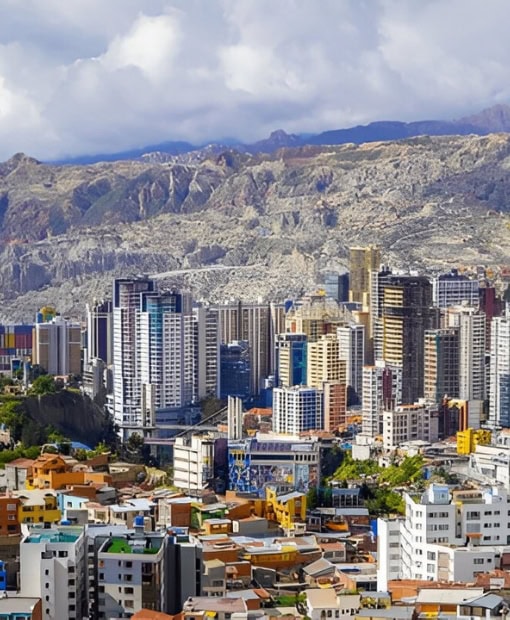
The eSIM worked flawlessly during my entire trip to Bolivia. I simply scanned the QR code upon arrival, and I had access to 5G speeds in La Paz immediately. It made navigating the city so much easier!
PS
Priya S.
Mumbai, IN · May 2026
Perfect for Bolivia!
The esima eSIM worked flawlessly during my trip to Bolivia. I easily scanned the QR code upon arrival, and within minutes I was connected to 5G. Streaming videos and using maps was a breeze!
EG
Elena G.
Madrid, ES · May 2026
Good coverage in cities
Overall, I had a solid experience with esima in Bolivia. Coverage in La Paz and Santa Cruz was excellent, but I struggled a bit in more remote areas. Setup was quick, just a QR scan, and customer service was helpful when I had a question.
IB
Isla B.
Auckland, NZ · May 2026
Installation was tricky
The eSIM was a bit confusing to install at first. I had to follow the instructions multiple times before it worked. Once it was set up, the service was okay, but I experienced slow speeds when travelling to some less populated areas.
AK
Arjun K.
Bangalore, IN · May 2026
Good coverage in remote areas
I was pleasantly surprised by the coverage in some remote parts of Bolivia, like Copacabana. It took about 2 minutes to set up using the manual code, and while the speed was decent, streaming was a bit spotty at times.
MD
Marco D.
Rome, IT · Apr 2026
Reliable and easy setup
I was impressed with how simple the esima eSIM setup was. Just scanned the QR code at the airport in Cochabamba and I was online in no time. The speed was mostly good for browsing and social media, though it dipped a bit in the more mountainous regions.
WL
Wei L.
Singapore, SG · Mar 2026
Decent but not perfect
The esima eSIM worked reasonably well during my time in Bolivia. However, I encountered slow speeds at times, especially in rural areas. The installation process was straightforward, but the app had some glitches, which made monitoring data usage tricky.
eSIM vs roaming in Bolivia
Typical home-carrier roaming
£10–£18
per day
Esima eSIM
£7.72
Flat rate
Most international carriers charge per-day roaming fees for Bolivia, and those fees stack quickly on a two-week altiplano trip. Roaming bundles from major networks typically throttle after the first gigabyte or two, and hotspot is often blocked or costs extra.
The bigger issue is coverage: many roaming agreements in Bolivia route through a single local carrier, so if that carrier has weak signal in Uyuni or on the Death Road, you have no fallback.
An eSIM gives you access to Entel, Tigo, or Viva with automatic handoff, so you get the strongest tower at each location rather than one carrier's blind spot.
The flat-price model means your cost is fixed whether you use two gigabytes or twenty, and hotspot works by default — important if you are traveling with a laptop or a partner who needs to tether. No surprise bill when you get home, no throttling after the first gigabyte, no deposit to activate.
Real trips, real travelers
Built for travelers like you
Different trip, same eSIM — here is how it lands for the most common visitors to Bolivia.
You are shooting sunrise on the Uyuni Salt Flats and need to upload client proofs by evening. The flats are offline, so you cache your route in Uyuni town on 3G, shoot all day, then drive back to town to upload on 4G from your hotel. The eSIM hotspot lets you tether your laptop and transfer 2GB of RAW files without hunting for a café with Wi-Fi.
Salt-flats photographer
You are hopping between La Paz, Copacabana, Isla del Sol, and Uyuni over ten days. The eSIM keeps you connected in every town for hostel bookings and bus schedules, but you cache offline maps before each leg because the highways and islands are mostly off-grid. WhatsApp works in Copacabana to coordinate boat times, but Isla del Sol is silent except at the north dock.
Altiplano backpacker
You are spending two weeks in La Paz between visa runs to Peru. The eSIM hotspot turns your phone into a reliable 4G modem in Sopocachi and the Zona Sur, so you can take client calls from your Airbnb or a coworking space. When you take a weekend trip to Tiwanaku or the Death Road, you download your work files beforehand because rural coverage drops to 3G or edge.
Remote worker on a visa run
Apps you'll need data for in Bolivia
The apps locals and travelers actually use — the ones that need real cell data, not just hotel Wi-Fi.
inDriver
Rideshare app for La Paz, Santa Cruz, and Cochabamba
Tigo Money
Mobile wallet for bill payments and transfers
Google Maps
Navigation — cache routes before rural trips
WhatsApp
Primary messaging and voice calls in Bolivia
Moovit
Public transit schedules for La Paz's Mi Teleférico and buses
XE Currency
Boliviano exchange rates — works offline after initial setup
How much data you'll burn per day
WhatsApp
~50MB/day for text chats, ~150MB/day with voice calls. Video calls use 300–500MB per hour.
Maps
5–10MB/hour in live navigation if you cache the route beforehand; 50–100MB/hour if you do not. Cache routes before rural trips.
Rideshare
inDriver uses ~5MB per ride for driver tracking and route display. Budget 20–30MB/day if you are using it multiple times in La Paz or Santa Cruz.
When you're travelling matters
Bolivia's rainy season runs from November to March, and heavy rains can flood the Uyuni Salt Flats, creating the famous mirror effect but also cutting road access and cell towers. Entel and Tigo's 3G coverage in Uyuni town can drop to edge or go offline entirely during severe storms.
If you are visiting Uyuni between December and February, download offline maps and cache your accommodation details before you leave La Paz or Potosí. The dry season from May to October has more reliable connectivity, but the salt flats and the Siloli Desert remain offline year-round.
FAQ
Frequently asked questions
Does eSIM work on the Uyuni Salt Flats?
No. Uyuni town has 3G from Entel and Tigo, enough for WhatsApp and map caching, but the salt flats, Isla Incahuasi, and the Siloli Desert are completely offline. Download offline maps and cache your accommodation details before you leave town. You will not have signal again until you return to Uyuni or reach Villamar on the Chilean border.
Does eSIM work on Isla del Sol in Lake Titicaca?
Barely. Copacabana on the mainland has 4G from all carriers, but Isla del Sol has weak 3G only at the north dock where the boats arrive. The rest of the island — the Inca ruins, the south village, the hiking trails — is off-grid. Cache your maps and hostel details in Copacabana before you board the boat.
Does eSIM work on the Death Road (Yungas Road)?
Partially. Entel has coverage for the first 20 kilometers out of La Paz, then drops to 3G and edge as you descend into the Yungas. Most of the Death Road itself is 3G-only or no signal. Download your route, emergency contacts, and any music or podcasts before you start the ride. You will regain 4G when you reach Coroico at the bottom.
How much data do I need for a week in Bolivia?
Two to four gigabytes covers most travelers. WhatsApp chats and voice calls use roughly 50–150MB per day. Google Maps in live navigation mode uses 5–10MB per hour if you cache the route beforehand, or 50–100MB per hour if you do not. If you are uploading photos from the salt flats or streaming music on long bus rides, budget five to seven gigabytes for the week.
Can I make WhatsApp calls in Bolivia on this eSIM?
Yes. WhatsApp voice and video calls work on the eSIM anywhere you have 3G or better — La Paz, Santa Cruz, Sucre, Copacabana, and Uyuni town all have enough bandwidth. The salt flats, Isla del Sol, and the Siloli Desert are offline, so you will not be able to call from those locations. WhatsApp chats (text only) work even on slow 3G.
Entel vs Tigo coverage in La Paz — which is better?
Both Entel and Tigo deliver 4G across La Paz and El Alto, including inside Mi Teleférico cabins. Entel has slightly better rural coverage on the highways to Copacabana and Oruro, while Tigo is stronger in some indoor shopping centers and hotels. The eSIM hands off between carriers automatically, so you get whichever is strongest at your location.
Does Uber work in Bolivia on this eSIM?
Uber does not operate in Bolivia. The main rideshare app is inDriver, which works on the eSIM in La Paz, Santa Cruz, and Cochabamba. You will need live data to request a ride and see the driver's location. In smaller cities like Sucre and Potosí, taxis are hailed on the street or arranged through your hotel.
Does the eSIM work in Potosí and the silver mines?
Yes. Potosí city has 4G from Entel, Tigo, and Viva. The Cerro Rico mines themselves have patchy 3G inside the tunnels — some tour operators carry radios instead of relying on cell signal. If you are visiting the mines, tell someone your itinerary before you go underground, and do not rely on your phone for emergency contact inside the mountain.
eSIM vs airport SIM in Bolivia — which is better?
An eSIM is faster to install and does not require a passport photocopy or deposit. A physical SIM from Entel or Tigo at the airport gives you the same coverage and speed, but you will wait in line, fill out a form, and pay a small activation fee. If your phone supports eSIM, install it before you land and skip the counter. If your phone does not support eSIM, buy a physical SIM at the airport or any Entel/Tigo shop in the city.
How much data does Google Maps use on a La Paz to Uyuni road trip?
If you cache the route in La Paz before you leave, Google Maps uses 5–10MB per hour in live navigation mode. If you do not cache the route, it uses 50–100MB per hour because it downloads map tiles on the fly. The highway to Uyuni has long 3G-only stretches, so caching the route beforehand saves data and ensures the map works even when signal is weak.
Does the eSIM work in Rurrenabaque and the Amazon basin?
Rurrenabaque town has 4G from Entel and Tigo. The moment you leave town for a jungle lodge or a pampas tour, you are offline. Most lodges in Madidi National Park and the surrounding rainforest have no cell coverage. Download offline maps, cache your itinerary, and tell your hotel your return date before you head into the jungle.
Can I use the eSIM hotspot to work remotely from La Paz?
Yes. Hotspot is enabled by default on esima eSIMs, and La Paz has reliable 4G from Entel, Tigo, and Viva. Expect 10–30 Mbps download speeds in the Zona Sur, Sopocachi, and the main tourist areas — enough for video calls, cloud documents, and email. If you need faster speeds, most coworking spaces and cafes have fiber Wi-Fi.
Does the eSIM work on the train from Oruro to Uyuni?
Partially. The train passes through Oruro, Challapata, and a few smaller towns where you will have 3G or 4G. Between towns, expect long stretches of no signal or edge-only coverage. Download your entertainment, cache your maps, and do not rely on live connectivity for the six-hour journey. You will regain 3G when you arrive in Uyuni.
Need broader coverage?
Going further than Bolivia? These plans include Bolivia plus everywhere in between.
Bolivia puts you on the roof of the world — La Paz sits at 3,640 meters, Uyuni's salt flats stretch for 10,000 square kilometers, and the Death Road drops 3,500 meters in 64 kilometers. A Bolivia eSIM keeps you connected on Entel, Tigo, or Viva's local network from the moment you land in El Alto, so you skip the airport SIM counter, the passport photocopy, and the roaming bill that climbs every time you refresh your map on the altiplano.
Choose your plan
4 options
Balanced use — social, navigation & light streaming
Choose number of eSIMs
How many travelers?
1 eSIM
Total£28.16
Secure payment
30-day guarantee
Tigo BoliviaLTE
Features
Data-only plan, no contract
Works on 4G LTE networks
Choose when your plan activates
Connects to top local carriers
No physical SIM swap needed
24/7 customer support
Description
You land in El Alto, scan the eSIM QR code in the arrivals hall, and your phone locks onto Entel or Tigo within 30 seconds. No queue, no passport photocopy, no Spanish negotiation over data bundles.
The eSIM behaves like a local prepaid SIM — you get a Bolivian IP address, local routing, and the same tower priority as a domestic customer — but you installed it from your hotel in São Paulo or your apartment in Seoul.
In La Paz, the eSIM works inside every Mi Teleférico cabin, across the Witches' Market, and up to El Alto's sprawl. The highway south to Oruro and Uyuni has LTE in towns but drops to 3G or edge between settlements.
Uyuni town itself has 3G from Entel and Tigo, enough for WhatsApp and map caching, but the moment you drive onto the salt flats or into the Siloli Desert on a multi-day jeep tour, you are offline until you return to town.
Copacabana on Lake Titicaca has 4G, but if you take the boat to Isla del Sol, expect weak 3G only at the north dock and nothing elsewhere on the island. The main difference between this eSIM and a physical SIM from an Entel or Tigo shop is installation speed and the lack of a deposit.
Coverage, speed, and tower priority are identical. If you need to top up mid-trip, most eSIM providers let you buy a second data pack through their app without swapping profiles.
Technical specs
Network
Tigo BoliviaLTE
Coverage
Bolivia
Delivery
Immediate, by email
Plan type
Data only
Phone number
No
SMS / calls
VoIP apps only
Activation
QR code or manual SM-DP+
Why travelers choose Esima
Three reasons travelers pick esima for Bolivia. First: you pay local prepaid rates, not the roaming markup your home carrier charges for a Bolivian tower.
Second: the eSIM hands off between Entel, Tigo, and Viva automatically, so you get the strongest signal in La Paz's cable-car cabins or Sucre's colonial center rather than one carrier's blind spot.
Third: hotspot is enabled by default — critical if you are traveling with a laptop, a second phone, or a partner who needs to tether. No throttling on the first few gigabytes like some local prepaid deals, and no deposit to get your number activated.
Instant delivery
Your QR code lands in your inbox minutes after purchase.
No roaming bills
Pay one upfront price — no surprise charges abroad.
Keep your number
Your physical SIM stays active for calls and texts.
Fast 4G/5G
Connect to top-rated local networks at full speed.
24/7 support
Real humans ready to help, any time zone, any day.
Easy install
Scan once and you're online — no app, no SIM swap.
Coverage in Bolivia
Our Bolivia eSIMs run on Entel Bolivia, Tigo Bolivia, and Viva. Bolivia has no 5G deployment as of 2024; LTE is the fastest available network in La Paz and Santa Cruz.
Entel has the widest rural footprint, including the La Paz–Copacabana highway and the Yungas Road. La Paz's Mi Teleférico cable-car network delivers 4G in-cabin on Entel and Tigo across all 11 lines.
Sucre's colonial center has reliable 4G from all three carriers, but Tarabuco market and nearby villages drop to 3G. The highway from La Paz to Santa Cruz via Cochabamba runs LTE in cities but long 3G-only stretches through the Andes.
Uyuni town has 3G from Entel and Tigo, but the salt flats, Isla Incahuasi, and the Siloli Desert are completely offline. Lake Titicaca's Copacabana has 4G, but Isla del Sol has weak 3G only at the north dock; the rest of the island is off-grid.
Network
Tigo BoliviaLTE
Good to know
Download offline maps for Uyuni, the Siloli Desert, and any multi-day jeep tour route before you leave town — the salt flats and Eduardo Avaroa Reserve are completely offline.
Isla del Sol has weak 3G only at the north dock; the rest of the island is off-grid. Cache your accommodation details and any boat schedules before you board in Copacabana.
La Paz's Mi Teleférico has 4G in-cabin on Entel and Tigo, but not in the stations themselves — wait until you are seated to load maps or make calls.
The Death Road (Yungas Road) has Entel coverage for the first 20 kilometers, then drops to 3G and edge. Download your route and emergency contacts before you start the descent.
Sucre to Potosí is a three-hour drive with LTE in both cities but long 3G-only stretches in between. Cache your music or podcasts before you leave.
If you are flying into El Alto, turn on your eSIM before you land — the airport has 4G from all carriers, and you will connect faster than waiting until you reach baggage claim.
Coverage in Bolivia — top cities
La Paz
La Paz and El Alto form one continuous urban zone with reliable 4G from Entel, Tigo, and Viva. The Mi Teleférico cable-car network has in-cabin 4G on Entel and Tigo across all 11 lines, so your eSIM works from the Zona Sur up to El Alto's markets. The Witches' Market, Plaza Murillo, and the main tourist corridor all have strong LTE. The Yungas Road (Death Road) has Entel coverage for the first 20 kilometers, then drops to 3G and edge as you descend.
Santa Cruz
Santa Cruz is Bolivia's largest city and has the densest LTE coverage in the country. All three carriers deliver 4G in the center, the bus terminal, and Viru Viru International Airport. The highway west toward Cochabamba and La Paz has LTE in towns but long 3G-only stretches through the Andes. If you are heading to the Jesuit Missions circuit, expect 3G in San Javier and Concepción, and edge or no signal between villages.
Sucre
Sucre's colonial center has reliable 4G from Entel, Tigo, and Viva. The main plaza, the cathedral, and the Recoleta viewpoint all have strong LTE. Tarabuco market, 65 kilometers southeast, has 3G-only coverage, and nearby villages often drop to edge or no signal. If you are day-tripping to the dinosaur footprints at Cal Orcko, expect 4G in the park itself but patchy 3G on the approach road.
How to set up your eSIM
1
Check compatibility
Make sure your phone supports eSIM — most recent models do.
2
Buy your eSIM
Pick a plan and pay securely. Your QR code arrives by email in minutes.
3
Scan & connect
Scan the QR code, enable data roaming on arrival, and you're online.
 WhatsApp +44 7367 063273