WhatsApp +44 7367 063273
Sarah M.
London, GB · Jun 2026
Reliable connection
I had a good experience with esima while traveling around Ghana. Customer support replied after a few hours, which felt long when I was anxious to get connected. Otherwise, a solid choice!
65 verified reviews
Based on 65 reviews
Sarah M.
London, GB · Jun 2026
I had a good experience with esima while traveling around Ghana. Customer support replied after a few hours, which felt long when I was anxious to get connected. Otherwise, a solid choice!
Megan H.
Cape Town, ZA · May 2026
Used esima while traveling from Kumasi to Takoradi, and I had no issues at all. It was great for keeping in touch with locals and navigating the roads.
Ava M.
Melbourne, AU · May 2026
From Accra to Cape Coast, the eSIM kept me connected. I used it for everything from booking hotels to navigating local markets. Really made my trip smoother!
Emma T.
Edinburgh, GB · May 2026
I scanned the QR code right at Kotoka International Airport and was online within seconds. Used it for Google Maps and local group chats throughout my stay in Accra. Highly recommend!
Camila R.
Mexico City, MX · May 2026
I arrived in Accra and activated my esima eSIM instantly. Scanned the QR code, and I was connected within seconds. Used it for Google Maps and sharing photos easily with friends back home. Highly recommend!
Arjun K.
Bangalore, IN · Apr 2026
Using esima in Ghana was a breeze! I relied on it for navigation and keeping in touch with my travel group. The setup was so easy, and I really appreciated not having to deal with roaming fees.
Liam C.
Vancouver, CA · Apr 2026
The eSIM worked perfectly during my stay in Ghana. I used it mainly for social media and communication. I just wish I'd opted for the bigger data plan, as I ran out a bit too quickly.
Ava M.
Melbourne, AU · Apr 2026
The eSIM worked perfectly for me during my trip to Ghana. The customer support was helpful when I had questions, although it took a little longer to get a reply than I expected. Overall, a solid choice!
Typical home-carrier roaming
£10–£18
per day
Esima eSIM
£2.49
Flat rate
Most international carriers charge roaming rates that treat Ghana as a premium African destination — you typically get one or two gigabytes before heavy throttling kicks in, and hotspot is either blocked or metered separately.
The first gigabyte often runs at full LTE speed, then the network steps you down to 3G-equivalent or slower, which makes maps sluggish and video calls choppy.
An eSIM gives you a flat data pool at local prepaid pricing with no speed tiers: your tenth gigabyte moves as fast as your first, and tethering counts against the same bucket with no separate limit.
Roaming bundles also lock you to whichever carrier your home network has a wholesale deal with — often not the strongest one in every city — while the eSIM hands off between MTN, Telecel, and AT Ghana automatically, so you get the best available tower in Tamale or Cape Coast without manual switching.
Different trip, same eSIM — here is how it lands for the most common visitors to Ghana.
You are visiting family in Kumasi and Accra for three weeks. The eSIM keeps you connected to WhatsApp and MTN MoMo without borrowing a relative's SIM, and hotspot lets you work remotely from the guesthouse when the Wi-Fi drops. You top up once mid-trip from your cousin's living room and never visit a telecom shop.
Diaspora visitor
Your itinerary covers Cape Coast Castle, Elmina, the Pan-African Heritage Museum, and Kwame Nkrumah's mausoleum. The eSIM gives you live maps for the coastal drive, 4G at every heritage site for photos and research, and enough data to stream a podcast on the tro-tro between Accra and Cape Coast without draining your plan.
Heritage-trail traveler
You are flying into Tamale, driving to Mole National Park, then looping back through the Volta Region to see Wli Falls. The eSIM works well in Tamale for Bolt and maps; you download offline routes before heading north because Mole has no cell backup. In the Volta villages, 3G is enough for WhatsApp check-ins, and you reload data over hotel Wi-Fi in Ho.
Safari and waterfall explorer
The apps locals and travelers actually use — the ones that need real cell data, not just hotel Wi-Fi.
Bolt
Rideshare in Accra and Kumasi — request rides, track drivers, pay in-app.

Uber
Rideshare in Accra (limited Kumasi coverage) — live tracking and cashless payment.

Yango
Rideshare alternative in Accra — similar to Bolt, sometimes cheaper fares.

MTN MoMo
Mobile-money wallet for payments at markets, tro-tros, and guesthouses.
Google Maps
Navigation for highways, city streets, and heritage sites — download offline maps for rural areas.
Primary messaging and voice-call app — used by hosts, drivers, and tour guides.
~40MB per day for text and voice messages; ~120MB per day if you make daily video calls to family or coordinate with tour guides.
Maps
~80MB per day for live turn-by-turn navigation between Accra, Kumasi, and Cape Coast; cache offline maps for Mole and Volta to cut this to ~20MB.
Rideshare
~3MB per Bolt or Uber ride in Accra or Kumasi; budget ~50MB per week if you take two rides daily.
December brings the Detty Rave festival season and a surge of diaspora visitors to Accra and Kumasi — data demand spikes in Osu, Labadi, and East Legon, so speeds can dip during evening events and weekend parties.
The Pan-African Heritage Museum, which opened in 2024, draws steady traffic year-round but sees peak crowds during Ghana's independence celebrations in early March.
If you are traveling in late December or early March, buy a larger data plan than you think you need; network congestion is real but rarely drops you offline, just slows things down.
Cell coverage inside Mole is 3G-only on the approach roads and nonexistent inside most safari camps — the lodges rely on camp Wi-Fi. Download offline maps and any park permits in Tamale before you drive north; you will lose signal about 40 minutes outside the city.
You can receive MoMo payments from friends or vendors, but topping up an MTN MoMo wallet requires a Ghana Card, which foreigners cannot obtain. The eSIM gives you data to open the MoMo app and confirm transactions, but you will need a local contact or a physical card to fund the wallet itself.
Budget 3–5GB if you use Bolt daily, stream music on tro-tros, and make WhatsApp video calls. Add another 1–2GB if you are uploading photos to Instagram or working remotely. Hotspot tethering to a laptop for email and light browsing adds roughly 500MB per day.
Yes — both sites sit in solid 4G zones on MTN and Telecel. You will have enough signal to navigate, take photos, and share them live. The coastal highway between Accra and Cape Coast holds LTE the entire way.
MTN has broader 4G coverage across Tamale, including the central market and the road toward Mole. Telecel covers the city center well but thins faster on the northern highway. The eSIM will hand off to whichever carrier is stronger at your location.
Yes — voice and video calls over WhatsApp, Telegram, FaceTime, and similar apps work normally. In Accra and Kumasi, 4G or 5G gives you clear audio and stable video. In 3G zones like the Volta Region or rural Northern Region, video may stutter; voice calls stay reliable.
Bolt operates in Accra and Kumasi and needs live data to request rides, track drivers, and process payments. The eSIM provides the same connectivity as a local SIM, so the app works exactly as it does for Ghanaian users. Cape Coast and Takoradi have no Bolt coverage.
MTN delivers 4G along the entire central corridor, with brief 3G patches near smaller towns. Telecel covers the route but with more LTE-to-3G handoffs. Expect consistent signal for maps and music streaming; only deep rural side roads lose coverage entirely.
An airport SIM from MTN or Telecel costs about the same per gigabyte but requires a queue, a passport photocopy, and often a minimum bundle you may not use. The eSIM activates the moment you land with no vendor interaction, and you can top up from your hotel room rather than hunting for a retail shop.
Yes — Takoradi has 4G on MTN and Telecel across the port district and the market area. No app-hail rideshare operates there, so you will rely on local taxis and Google Maps. The coastal road west toward Axim holds LTE; inland routes drop to 3G quickly.
Yes — hotspot and tethering are enabled by default with no throttle on the first 5GB. Useful if you are working remotely from a guesthouse or sharing data with a travel partner. Each gigabyte you tether counts against your total plan allowance.
A single Uber or Bolt trip — request, live tracking, and payment — uses 2–5MB. If you take three rides a day for a week, budget roughly 50–100MB total. The bigger data draw is maps running in the background and WhatsApp chats with your driver.
The Volta Region around Wli Falls is 3G-mostly with long dead zones on forest trails. You will have intermittent signal in the village of Wli Afegame, but expect no coverage on the hike to the upper falls. Download offline maps and any permits before you leave Ho or Hohoe.
You can top up through the esima app or website from any location with Wi-Fi or remaining data. The new allowance activates within seconds. If you are in a dead zone, wait until you reach a town with 3G or 4G, or use hotel Wi-Fi to reload.
MTN has the broadest rural footprint — secondary highways and most district capitals get at least 3G. AT Ghana (AirtelTigo) fills gaps in some Northern Region towns but is thinner overall. The eSIM will prefer MTN in most rural contexts and fall back to AT Ghana or Telecel where MTN is weak.
Going further than Ghana? These plans include Ghana plus everywhere in between.
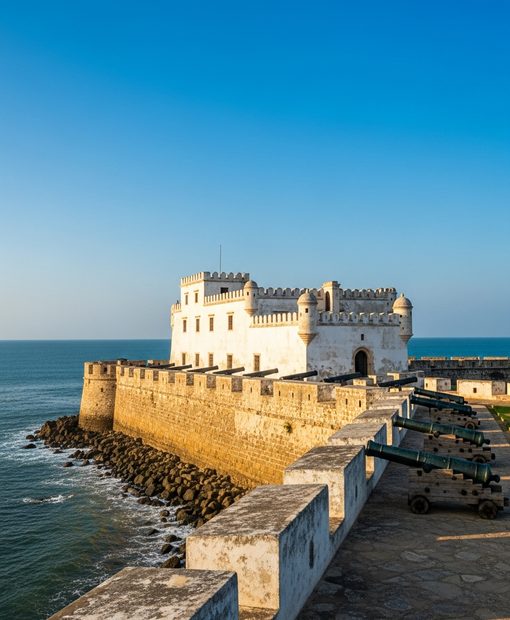

Ghana runs on mobile money — tro-tros, kelewele stalls, and most guesthouses outside Accra take MTN MoMo before they take Visa.
A Ghana eSIM puts you on MTN or Telecel's local network the moment you land at Kotoka, so you can hail a Bolt, top up data, and navigate the Accra-Kumasi highway without hunting for a SIM vendor or waiting in a queue. One QR scan before your flight, you are online when the wheels touch down.
Balanced use — social, navigation & light streaming
How many travelers?
Landing at Kotoka International, your eSIM connects to MTN or Telecel within seconds of switching off airplane mode — no SIM-card kiosk, no passport photocopy, no minimum top-up. Installation happens before you fly: scan the QR code esima emails you, label the line 'Ghana' or 'Travel', leave it inactive until you board.
The profile sits dormant on your phone; you flip it on when the captain announces descent into Accra. By the time you clear immigration, you have signal strong enough to open Bolt or WhatsApp your host.
Across the country, the eSIM behaves like a local prepaid plan. In Accra and Kumasi, you will see 4G or 5G most of the time — fast enough to stream a playlist on the tro-tro or upload photos from Kwame Nkrumah Memorial Park.
The coastal highway to Cape Coast holds LTE; the castles at Elmina have 4G for live navigation and ride-hail apps.
Heading inland toward Mole or the Volta Region, coverage drops to 3G or disappears entirely in the forest reserves — plan to cache maps and download any permits or tickets while you still have signal in Tamale.
A physical SIM from MTN or Telecel costs about the same per gigabyte but requires a vendor visit, a passport, and often a minimum GHS 10–20 bundle you may not need; the eSIM gives you exactly the data you want, activated from your hotel bed the night before departure.
Three reasons travelers pick esima for Ghana. First: you pay local prepaid rates, not the roaming premium your home carrier charges for African towers — typically half the cost per gigabyte.
Second: the eSIM hands off between MTN Ghana and Telecel Ghana automatically, so you get the strongest signal in Tamale or Cape Coast rather than one carrier's blind spot.
Third: hotspot is enabled by default with no throttle on the first 5GB — important if you are traveling with a laptop or sharing data with a partner whose phone does not support eSIM.
Your QR code lands in your inbox minutes after purchase.
Pay one upfront price — no surprise charges abroad.
Your physical SIM stays active for calls and texts.
Connect to top-rated local networks at full speed.
Real humans ready to help, any time zone, any day.
Scan once and you're online — no app, no SIM swap.
Our Ghana eSIMs run on MTN Ghana, Telecel Ghana, and AT Ghana (AirtelTigo). MTN holds roughly 60% of the market and delivers the broadest 4G and 5G footprint — Accra, Kumasi, Tamale, and the central highway corridor between them all get mid-band LTE-Advanced or 5G.
Telecel covers the coastal belt well; Cape Coast and Takoradi run on solid 4G. AT Ghana fills gaps in secondary towns.
Expect 3G-only around Volta Lake, Wli Falls, and the approach to Mole National Park — safari camps inside Mole rely on camp Wi-Fi with no cell backup. The Northern Region outside Tamale and Bolgatanga is patchy; download offline maps before any road trip north of Kumasi.
Network
Make sure your phone supports eSIM — most recent models do.
Pick a plan and pay securely. Your QR code arrives by email in minutes.
Scan the QR code, enable data roaming on arrival, and you're online.