I used esima during my time in Malaysia and was pleasantly surprised by the coverage. I was in Kuala Lumpur and Johor Bahru, and it worked great for video calls and social media. A reliable option!
ET
Emma T.
Edinburgh, GB · May 2026
Best decision for my trip
The esima eSIM was a lifesaver during my month-long stay in Malaysia. I enjoyed fast internet almost everywhere, even when I was on the go. Highly recommend for anyone planning to travel here!
EG
Elena G.
Madrid, ES · May 2026
No issues at all!
I was pleasantly surprised by how simple it was to set up the esima eSIM in Malaysia. I had great 4G coverage throughout my trip, whether in the city or at the beaches. Highly recommend for anyone traveling here!
ET
Emma T.
Edinburgh, GB · May 2026
Perfect for my Malaysia trip
The esima eSIM worked seamlessly throughout my travels in Malaysia. I just scanned the QR code upon landing in Kuala Lumpur, and within 30 seconds, I was online. I enjoyed streaming Netflix and browsing social media without any interruptions!
LO
Lucas O.
São Paulo, BR · May 2026
Instant activation!
As soon as I arrived in Malaysia, I activated my eSIM with the QR code. It was so easy! The connection was strong and I had no issues using social media or GPS apps during my travels.
SM
Sarah M.
London, GB · May 2026
Flawless connection in Malaysia
The esima eSIM worked perfectly throughout my trip in Malaysia. I just scanned the QR code upon arrival and was online in seconds. 5G speed in Kuala Lumpur made streaming Netflix a breeze!
JL
Jessica L.
New York, US · May 2026
Decent, but some hiccups
While the eSIM worked well in urban areas, I faced a few issues in the countryside near Cameron Highlands. Setup was straightforward, but I had trouble with the app crashing when I tried to check my balance. Not a dealbreaker, but could be better.
DH
David H.
Chicago, US · May 2026
Streamed Netflix without issues
I was impressed with how easily I could set up the eSIM upon landing in Malaysia. The speeds were excellent, and I managed to stream Netflix without buffering. Highly recommend this for travelers!
eSIM vs roaming in Malaysia
Typical home-carrier roaming
£8–£18
per day
Esima eSIM
£2.57
Flat rate
Most international carriers charge a daily roaming fee for Malaysia, with the first gigabyte or two at full speed and throttling after that — common structures cap you at 512kbps once you cross the threshold, which breaks live navigation and rideshare apps. Hotspot is often blocked or costs extra.
Your home carrier routes traffic through its own infrastructure, so latency is higher and local apps like Grab or Touch'n Go eWallet sometimes flag the connection as suspicious and ask for extra verification.
A Malaysia eSIM gives you a local Malaysian IP address, no throttling, and flat pricing regardless of how much data you burn — critical if you are navigating Borneo back roads or streaming a football match in a Penang cafe.
The cost stays predictable: you pay once for the eSIM bundle, not per day, so a two-week trip does not rack up daily fees.
Real trips, real travelers
Built for travelers like you
Different trip, same eSIM — here is how it lands for the most common visitors to Malaysia.
You are driving the North-South Expressway from Kuala Lumpur to Penang, stopping at Ipoh for white coffee and Taiping for the lake gardens. The eSIM keeps Waze live for toll-plaza lane guidance, lets you reload Touch'n Go eWallet credits at rest stops, and streams a podcast through the 400km drive. Every rest stop has strong cell coverage, so you never lose the map.
KL-Penang road-tripper
You are flying into Kota Kinabalu to trek the Crocker Range and visit Sepilok Orangutan Sanctuary. The eSIM works perfectly in KK city for Grab rides and hotel booking, but you download offline maps before heading inland — CelcomDigi has the broadest Sabah interior reach, but expect long dead stretches on the road to Kinabalu Park and Poring Hot Springs.
Borneo wildlife tracker
You are spending three days in Penang's UNESCO core, hunting street art and clan jetties. The eSIM keeps Google Maps live for the Chulia Street-Armenian Street loop, lets you book Grab to Kek Lok Si Temple, and pays for hawker-stall laksa with Touch'n Go eWallet QR codes. U Mobile is stronger than Maxis inside the old shophouses, and the eSIM hands off automatically.
George Town heritage walker
Apps you'll need data for in Malaysia
The apps locals and travelers actually use — the ones that need real cell data, not just hotel Wi-Fi.
Grab
Rideshare and food delivery — dominant across Malaysia
Touch'n Go eWallet
Mobile payments, highway toll reload, QR-code checkout
AirAsia Ride
Rideshare challenger to Grab in major cities
MyJPJ
Digital driving permit and vehicle registration
MySejahtera
Health check-in and vaccination certificate (still used at some borders)
Waze
Live traffic navigation — popular for KL and Penang traffic jams
How much data you'll burn per day
WhatsApp
~50MB/day for chats and photos, ~150MB/day with voice calls, ~400MB/day with video calls.
Maps
~150MB/day for live Google Maps or Waze navigation in Kuala Lumpur traffic; ~80MB/day for lighter Penang or Langkawi use.
Rideshare
~5-10MB per Grab or AirAsia Ride trip, including map refresh and driver tracking.
When you're travelling matters
The northeast monsoon (November-February) brings heavy rain to Malaysia's east coast — Kuantan, Terengganu, Kota Bharu — and can temporarily slow 5G to LTE or LTE to 3G during storms, though towers recover fast. Peninsular west coast (Kuala Lumpur, Penang, Langkawi) and Borneo (Sabah, Sarawak) stay stable year-round.
Chinese New Year (late January or early February) and Hari Raya (end of Ramadan, dates shift yearly) trigger massive traffic surges on the North-South Expressway — expect slower data speeds at highway rest stops and toll plazas during peak travel windows, though coverage itself remains strong.
FAQ
Frequently asked questions
Does eSIM work in Langkawi?
Yes. Langkawi has 5G in Pantai Cenang and Kuah town from Maxis and Yes; the rest of the island runs on LTE from CelcomDigi and U Mobile. The cable-car ride to Gunung Mat Cincang has LTE at both stations but drops signal halfway up. Offshore islands like Pulau Dayang Bunting are dead zones on every carrier.
Does eSIM work on Mount Kinabalu?
Kota Kinabalu city has strong 4G and 5G, but the Mount Kinabalu summit climb is a 24-hour offline window on every carrier. You will have LTE at the park gate and Timpohon Gate, patchy signal at Laban Rata (the overnight hut), and nothing from there to Low's Peak. Download offline maps and tell your hotel you will be unreachable.
Does eSIM work in the Petronas Twin Towers?
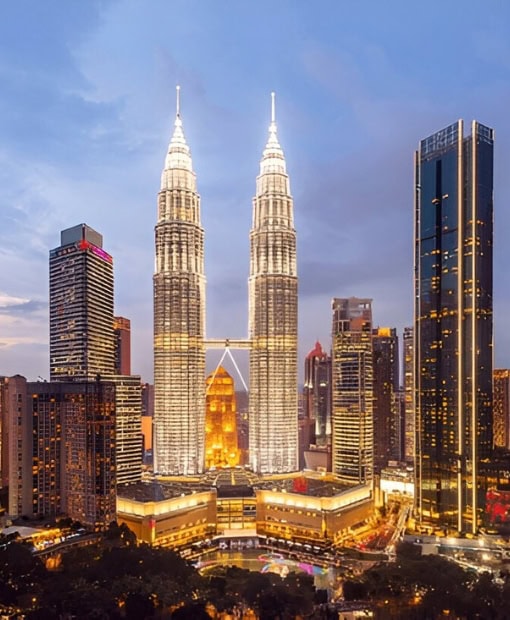
The Petronas Towers district has 5G from Maxis and Yes, but the SkyBridge itself is a known indoor cellular dead zone — steel and glass block most signals. Offline-load Google Maps and any tickets before you go up. The observation deck on the 86th floor has better coverage than the bridge.
Does eSIM work in Borneo (Sabah and Sarawak)?
Kota Kinabalu, Kuching and Miri have strong city coverage with 4G and 5G. Inland Sabah and Sarawak have noticeably patchier coverage — CelcomDigi has the broadest reach into interior zones, but expect long dead stretches on roads to Bario, Mulu Caves and the Crocker Range. Download offline maps before leaving the city.
How much data do I need for a week in Malaysia?
A week of moderate use — Grab rides, Google Maps navigation, WhatsApp, occasional Instagram — burns 3-5GB. If you are streaming video in hotels or hotspotting a laptop, budget 8-12GB. The North-South Expressway drive from KL to Penang uses about 200MB for live navigation; a full day of Waze in Kuala Lumpur traffic uses 150-250MB.
Can I make WhatsApp calls in Malaysia?
Yes. WhatsApp voice and video calls work on any data connection, and Malaysia has no VoIP restrictions. A 30-minute WhatsApp voice call uses about 20-30MB; a 30-minute video call uses 200-300MB. Quality depends on signal strength — expect perfect clarity in Kuala Lumpur, occasional drops in Langkawi interior.
Does Grab work on this eSIM?
Yes. Grab is the dominant rideshare app in Malaysia and needs live data to confirm pickup, calculate fares and track your driver. AirAsia Ride is the local challenger and works the same way. Both apps use about 5-10MB per ride. Book the ride before you walk out of a restaurant or mall, not on the kerb.
CelcomDigi vs Maxis coverage in Kuala Lumpur?
Both are excellent in KL. Maxis has faster 5G in KLCC, Bukit Bintang and the Golden Triangle; CelcomDigi dominates older neighbourhoods like Chow Kit and Sentul. The LRT and MRT have full coverage from both carriers. For most travellers the difference is invisible — the eSIM hands off to whichever is stronger at your location.
CelcomDigi vs U Mobile coverage in Penang?
CelcomDigi has broader island-wide reach; U Mobile is stronger inside George Town's UNESCO core, especially older shophouses on Chulia Street and Armenian Street. Both have 4G along Gurney Drive and Batu Ferringhi. If you are driving the interior loop to Telaga Tujuh or the Penang National Park, CelcomDigi is more reliable.
Does Touch'n Go eWallet work on this eSIM?
Yes. Touch'n Go eWallet is Malaysia's dominant mobile payment app and needs live data to reload highway toll credits, pay for parking and scan QR codes at shops. Top up before you hit the North-South Expressway, not at the toll plaza. The app uses about 2-5MB per transaction.
Does MyJPJ work on this eSIM?
Yes. MyJPJ is the Malaysian digital driving permit app and needs live data for initial setup and periodic verification. Once loaded, your license and vehicle details cache offline. Set it up at your hotel before a road trip, not in a national park. The app uses about 10-15MB for initial sync.
eSIM vs airport SIM in Malaysia — which is better?
An airport SIM at KLIA costs MYR 30-50 for 7 days with 10-20GB, requires a passport photocopy and a queue at the Maxis or CelcomDigi booth. An eSIM installs at home before you fly, costs about the same, and does not burn 20 minutes of your arrival time. The coverage and speed are identical — both are local Malaysian prepaid plans. The eSIM wins on convenience; the airport SIM wins if your phone does not support eSIM.
Does eSIM work in Malacca?
Yes. Malacca city has strong 4G from all four carriers and 5G from Maxis and Yes along Jonker Street and the riverside. The A'Famosa and St. Paul's Hill have full coverage. If you are driving the coastal road to Port Dickson or Muar, expect continuous LTE — the highway rest stops have strong cell coverage every 30-60km.
Can I use hotspot on this eSIM?
Yes. Hotspot is enabled by default with no throttling on the first 5GB. You can tether a laptop in a Penang cafe, share data with a travel partner whose phone does not support eSIM, or connect a tablet in your hotel. After 5GB some plans may throttle hotspot speeds to 5-10 Mbps, but direct phone usage stays full-speed.
Does eSIM work during monsoon season in Malaysia?
Yes. Heavy rain can slow 5G to LTE and LTE to 3G temporarily, but Malaysian cell towers are built for tropical weather and recover fast. The northeast monsoon (November-February) hits the east coast hardest — expect occasional slowdowns in Kuantan, Terengganu and Kota Bharu during storms, but Kuala Lumpur, Penang and Langkawi stay stable year-round.
Need broader coverage?
Going further than Malaysia? These plans include Malaysia plus everywhere in between.
Malaysia runs on mobile apps — Grab for rides, Touch'n Go eWallet for highway tolls, MyJPJ for digital driving permits, AirAsia Ride in cities where Grab surge-prices. A Malaysia eSIM drops you straight onto CelcomDigi, Maxis, U Mobile or Yes the moment you land at KLIA, so you skip the airport kiosk queue and the roaming surcharge your home carrier would bill for every tower ping from Kuala Lumpur to Kota Kinabalu.
Choose your plan
8 options
Balanced use — social, navigation & light streaming
Choose number of eSIMs
How many travelers?
1 eSIM
Total£6.66
Secure payment
30-day guarantee
Celcom Malaysia5G
Features
Data-only plan, no contract
Works on 5G / 4G LTE networks
Choose when your plan activates
Connects to top local carriers
No physical SIM swap needed
24/7 customer support
Description
Landing at KLIA with a Malaysia eSIM means you walk off the plane, turn off airplane mode, and your phone registers on CelcomDigi, Maxis, U Mobile or Yes within 30 seconds — no queue at the Maxis booth, no passport photocopy, no MYR deposit.
Installation happens before you leave home: scan the QR code esima emails you, label the line 'Malaysia', set it as your data default, done. The eSIM behaves like a local Malaysian prepaid SIM but lives in your phone's software, so your home number stays active for two-factor SMS while the eSIM handles all data traffic.
Peninsular Malaysia — Kuala Lumpur, Penang, Malacca, Langkawi — is blanketed in 4G and 5G; expect gigabit speeds in the Petronas Twin Towers district (though the SkyBridge itself is a known indoor cellular dead zone, so offline-load Google Maps before going up).
Borneo is a different story: Kota Kinabalu and Kuching have strong city coverage, but inland Sabah and Sarawak drop to patchy LTE or nothing at all.
The difference between this and a physical local SIM is portability — you can delete the eSIM profile the day you leave and reclaim the slot, whereas a plastic SIM sits in a drawer forever.
Hotspot works without restriction, so you can tether a laptop in a Penang cafe or share data with a travel partner whose phone does not support eSIM.
Technical specs
Network
Celcom Malaysia5G
Coverage
Malaysia
Delivery
Immediate, by email
Plan type
Data only
Phone number
No
SMS / calls
VoIP apps only
Activation
QR code or manual SM-DP+
Why travelers choose Esima
Three reasons travellers pick esima for Malaysia. First: pricing mirrors local prepaid rates, not the roaming markup your home network charges for foreign towers.
Second: the eSIM hands off between CelcomDigi, Maxis, U Mobile and Yes automatically, so you get the strongest signal at your hotel rather than a single carrier's weak spot. Third: hotspot is enabled by default — critical if you are travelling with a laptop, a tablet, or a partner whose phone does not support eSIM. No throttling on the first 5GB like some Malaysian carrier deals impose on tourists.
Instant delivery
Your QR code lands in your inbox minutes after purchase.
No roaming bills
Pay one upfront price — no surprise charges abroad.
Keep your number
Your physical SIM stays active for calls and texts.
Fast 4G/5G
Connect to top-rated local networks at full speed.
24/7 support
Real humans ready to help, any time zone, any day.
Easy install
Scan once and you're online — no app, no SIM swap.
Coverage in Malaysia
Our Malaysia eSIMs run on CelcomDigi (the 2022 merger that holds about 60% market share), Maxis, U Mobile and Yes. CelcomDigi has the broadest 4G reach, including Sabah and Sarawak interior zones where other carriers thin out.
Kuala Lumpur, Penang and Johor Bahru all have 5G from Maxis and Yes; Langkawi has 5G in Pantai Cenang and Kuah but expect LTE across the rest of the island. Borneo Malaysia — Sabah and Sarawak — has noticeably patchier inland coverage; the Mount Kinabalu summit climb is a 24-hour offline window on every carrier.
The North-South Expressway from KL to Penang is one of the most connectivity-friendly long drives in Southeast Asia, with rest stops carrying strong cell coverage every 30-60km.
Network
Celcom Malaysia5G
Good to know
Grab and AirAsia Ride both require live data to confirm pickup — book the ride before you walk out of a restaurant or mall, not on the kerb.
The Petronas Twin Towers SkyBridge is a known indoor cellular dead zone; offline-load Google Maps before going up.
Touch'n Go eWallet needs live data to reload highway toll credits — top up before you hit the North-South Expressway, not at the toll plaza.
Mount Kinabalu summit climb is a 24-hour offline window on every carrier; download offline maps and tell your hotel you will be unreachable.
Malaysian highways have rest stops with strong cell coverage every 30-60km — the North-South Expressway from KL to Penang is one of the most connectivity-friendly long drives in Southeast Asia.
MyJPJ (digital driving permit) and MySejahtera (health check-in) both cache data offline, but initial setup needs a live connection — do it at your hotel, not in a national park.
Coverage in Malaysia — top cities
Kuala Lumpur
KL is saturated with 5G from Maxis and Yes — you will hit 300+ Mbps in KLCC, Bukit Bintang and the Golden Triangle. The LRT and MRT finished cell-service rollout in 2024, so your eSIM works on platforms and in tunnels. CelcomDigi dominates older neighbourhoods like Chow Kit and Sentul. Expect dense crowds to slow speeds at Central Market and Pavilion KL during weekend peak hours.
Penang (George Town)
George Town's UNESCO core has strong 4G from all four carriers; 5G is live along Gurney Drive and the Komtar district. U Mobile is stronger than Maxis inside older shophouses on Chulia Street and Armenian Street. The Penang Hill funicular has LTE at the base and summit but drops signal mid-climb. Batu Ferringhi beach resorts all have indoor coverage, though signal thins in the jungle behind the hotels.
Langkawi
Langkawi has 5G in Pantai Cenang and Kuah town; the rest of the island runs on LTE. CelcomDigi covers the interior better than Maxis — important if you are driving the loop road to Tanjung Rhu or Telaga Tujuh waterfalls. The cable-car ride to Gunung Mat Cincang has LTE at both stations but drops signal halfway up. Offshore islands like Pulau Dayang Bunting are dead zones on every carrier.
How to set up your eSIM
1
Check compatibility
Make sure your phone supports eSIM — most recent models do.
2
Buy your eSIM
Pick a plan and pay securely. Your QR code arrives by email in minutes.
3
Scan & connect
Scan the QR code, enable data roaming on arrival, and you're online.
 WhatsApp +44 7367 063273