Used esima during my trip to the Netherlands Antilles, and it worked perfectly. I was able to navigate the beautiful islands with Google Maps without a hitch. Super easy QR scan setup!
PS
Priya S.
Mumbai, IN · May 2026
Good service, but slow response
Overall, I loved my esima experience in Aruba. It set up in seconds, but I reached out to support for a question and they took a little longer than expected to reply.
IB
Isla B.
Auckland, NZ · May 2026
Reliable connectivity!
Used esima throughout my stay in Bonaire. I could stream music, navigate, and stay in touch without a hitch. Highly recommend!
JK
James K.
Manchester, GB · May 2026
Essential for island hopping
This eSIM was a lifesaver while exploring multiple islands. Quick setup, and I never had to worry about roaming fees. Excellent service!
SA
Sven A.
Stockholm, SE · May 2026
Seamless in Sint Maarten
I activated the esima eSIM as soon as I landed in Sint Maarten. The QR scan was super quick, and I was on Google Maps finding my hotel within minutes. Definitely made my trip smoother!
EG
Elena G.
Madrid, ES · May 2026
Perfect for island hopping
Used esima while traveling across the Netherlands Antilles and it worked flawlessly. I was able to share photos instantly and navigate with Google Maps without any issues. Highly recommend!
LC
Liam C.
Vancouver, CA · Apr 2026
Highly recommend for travelers
Using esima in the Netherlands Antilles made my trip stress-free! I was able to share my adventures instantly on social media without worrying about roaming charges. Activation was super quick with the QR code.
EO
Ethan O.
Dublin, IE · Apr 2026
Solid option for tourists
The eSIM served me well while exploring Curacao. It was straightforward to get set up, and I appreciated being able to stay connected for my travel planning. Would love more options for longer validity!
eSIM vs roaming in Netherlands Antilles
Typical home-carrier roaming
£12–£22
per day
Esima eSIM
£7.49
Flat rate
Most international carriers treat the Netherlands Antilles as Zone 3 or Caribbean roaming, which means expensive daily passes and tight data caps. A typical roaming bundle gives you one or two gigabytes before throttling to 2G speeds; hotspot is often blocked entirely or costs extra.
The eSIM gives you a flat data allowance at local prepaid rates, with no throttling and no hotspot restrictions. Your home carrier's roaming also locks you to a single partner network (usually Digicel or Flow, depending on the commercial agreement), so you miss out on automatic handoff when another carrier has better coverage.
The eSIM switches between Digicel, Flow, and UTS based on signal strength, which matters in places like Bonaire's national park or Sint Maarten's interior where one carrier may have a tower and the others do not.
Roaming passes expire at midnight in your home time zone, not local time, which creates billing confusion if you are island-hopping across time zones.
Real trips, real travelers
Built for travelers like you
Different trip, same eSIM — here is how it lands for the most common visitors to Netherlands Antilles.
You are running back-to-back dives off Bonaire's west coast, uploading logs to PADI after each trip, and coordinating with the shop via WhatsApp. The eSIM keeps you connected in Kralendijk and at the southern dive sites; you switch to offline mode in Washington-Slagbaai and reconnect when you are back in town for the evening debrief.
Dive instructor
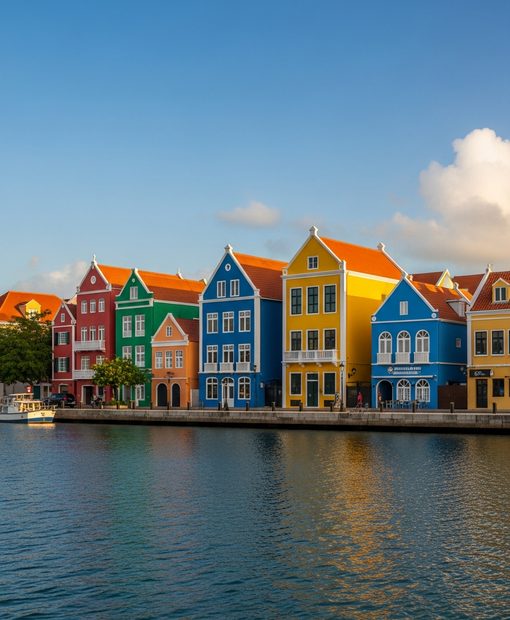
You have eight hours in Willemstad between ship arrival and departure. The eSIM activates the moment you step off the gangway, so you can book a taxi to Mambo Beach, navigate to the floating market, and upload photos from the Queen Emma Bridge without hunting for a SIM kiosk or paying the ship's satellite Wi-Fi rates.
Cruise-ship day-tripper
You are spending two weeks across Curaçao, Bonaire, and Sint Maarten, working mornings and exploring afternoons. The eSIM gives you hotspot for video calls in each town, reconnects automatically when you fly or ferry between islands, and lets you use bunq for payments without VPN workarounds. You download offline maps before any national-park drive and stay connected everywhere else.
Remote worker island-hopping
Apps you'll need data for in Netherlands Antilles
The apps locals and travelers actually use — the ones that need real cell data, not just hotel Wi-Fi.
WhatsApp
Dominant messaging app for dive shops, ferry bookings, and inter-island coordination
bunq
Dutch-style banking app used by expats for payments and two-factor auth
Knab
Alternative Dutch banking app for expats, needs live data for transaction approval
Google Maps
Primary navigation app; download offline maps for national parks before driving
PADI
Dive log upload and certification tracking for Bonaire and Curaçao dive sites
Uber
Available in Curaçao and Sint Maarten for airport and beach transfers
How much data you'll burn per day
WhatsApp
~60 MB/day for text and photo sharing with dive shops and tour operators; ~180 MB/day if you are making voice calls to coordinate ferry schedules.
Maps
~90 MB/day for live turn-by-turn navigation around Curaçao or Sint Maarten, including reroutes; drops to ~15 MB/day if you download offline maps first.
Rideshare
~25 MB/day for Uber pickups in Willemstad or Philipsburg, including real-time driver tracking and route updates.
When you're travelling matters
Hurricane season runs June through November, with peak risk in September and October. Digicel and Flow both have backup generators at major towers, but expect outages in the smaller islands (Saba, Sint Eustatius) if a storm makes landfall.
Download offline maps and emergency contacts before any late-summer trip. Curaçao and Bonaire sit south of the hurricane belt and rarely see direct hits, but Sint Maarten is more exposed — check local weather apps and have a backup plan for connectivity if a storm approaches.
FAQ
Frequently asked questions
Does the eSIM work in Christoffelpark and Shete Boka on Curaçao?
Coverage is patchy to nonexistent in both parks. Digicel and Flow have weak signal near the Christoffelpark entrance but drop entirely on the summit trail and inside Shete Boka's coastal caves. Download offline maps and trail guides before you drive out — cell service does not return until you are back near Willemstad's western suburbs.
How much data do I need for a week of diving in Bonaire?
Plan for 2-3 GB if you are uploading dive logs, using WhatsApp for shop coordination, and streaming a bit in the evenings. Most dive operators offer Wi-Fi, but it is slow and unreliable. If you are working remotely between dives or video-calling home, budget 5-7 GB for the week.
Can I make WhatsApp calls across the islands?
Yes. WhatsApp voice and video work fine on LTE in all the main towns and most coastal areas. Call quality drops in the national parks and on ferry crossings between islands, but it reconnects automatically when you reach the next port.
Does the eSIM work on the French side of Sint Maarten?
Yes. The eSIM treats the entire island — Dutch and French sides — as one coverage zone. You may see a roaming notification when you cross the border near Marigot, but ignore it; the eSIM does not charge extra and the same carriers (Digicel, UTS, Flow) cover both halves.
Digicel vs Flow coverage in Willemstad — which is better?
Both carriers deliver 4G at similar speeds (25-40 Mbps) in Punda, Otrobanda, and the cruise terminal. Digicel has a slight edge in the residential hills west of Scharloo; Flow is stronger near the airport and in the industrial zone east of the city. The eSIM switches between them automatically, so you get whichever is stronger at your location.
Does bunq work on this eSIM for payments in Curaçao?
Yes. bunq and Knab (the two dominant Dutch-style banking apps among expats) both need live data for two-factor authentication and payment confirmation. The eSIM provides a local IP and full data access, so you can use them exactly as you would at home — no VPN or workarounds needed.
UTS vs Digicel in Sint Maarten — which should I expect?
UTS has the strongest 4G in Philipsburg, Simpson Bay, and near the airport; Digicel is better on the French side and in the interior hills. The eSIM hands off between them based on signal strength, so you do not need to pick. Flow also operates on the island but has spottier coverage than the other two.
How much data does Google Maps use for a day of driving around Curaçao?
Expect 80-120 MB for a full day of turn-by-turn navigation, including reroutes and live traffic (which is minimal outside Willemstad). If you download the offline map for Curaçao before your trip, that drops to under 20 MB per day for GPS tracking only.
Can I hotspot my laptop for remote work in Bonaire?
Yes. Hotspot is enabled by default with no extra charge. Kralendijk's LTE delivers 15-30 Mbps, which is enough for video calls and cloud uploads. Expect slower speeds (5-10 Mbps) in the resort areas north of town and no signal at all in Washington-Slagbaai park.
Does the eSIM cover Aruba?
No. Aruba separated from the Netherlands Antilles in 1986 and uses its own ISO code (AW). This eSIM covers the post-2010 successor territories — Curaçao, Sint Maarten, Bonaire, Sint Eustatius, and Saba. You need a separate Aruba eSIM or a multi-country Caribbean plan if you are island-hopping to Aruba.
eSIM vs airport SIM in Willemstad — what changes?
An airport SIM from Digicel or Flow costs roughly the same as the eSIM but requires a passport photocopy, a physical card swap, and a trip to the kiosk. The eSIM installs before you leave home, activates when you land, and switches carriers automatically if one has better coverage. You also keep your physical SIM slot free for your home number.
Does the eSIM work on the ferry between Curaçao and Bonaire?
Coverage drops about 20 minutes after leaving port and stays dead until you are within sight of the next island. Download any maps, dive logs, or boarding passes before departure. The eSIM reconnects automatically when the ferry docks — no manual carrier selection needed.
How much data do I need for a week in Sint Maarten with daily beach Instagram posts?
Budget 3-4 GB if you are uploading photos and stories daily, using maps for restaurant navigation, and streaming a bit at night. If you are also video-calling or working remotely, add another 2-3 GB. Most resorts offer Wi-Fi, but it is slow and unreliable for uploads.
Need broader coverage?
Going further than Netherlands Antilles? These plans include Netherlands Antilles plus everywhere in between.
The Netherlands Antilles dissolved in 2010 into Curaçao, Sint Maarten, and the BES islands, but the AN routing code still lives in wholesale eSIM networks.
Your eSIM connects to Digicel, Flow, or UTS the moment you land in Willemstad or Kralendijk, so you skip the airport SIM counter and the confusion over which successor-island carrier to pick. One QR code covers the historic territory grouping — Curaçao's UNESCO port, Bonaire's dive sites, Sint Maarten's dual-nation beaches.
Choose your plan
8 options
Balanced use — social, navigation & light streaming
Choose number of eSIMs
How many travelers?
1 eSIM
Total£27.18
Secure payment
30-day guarantee
Setel Netherlands AntillesLTE
Features
Data-only plan, no contract
Works on 4G LTE networks
Choose when your plan activates
Connects to top local carriers
No physical SIM swap needed
24/7 customer support
Description
Landing in Willemstad or Kralendijk with this eSIM means you walk off the plane with live data — no SIM-card hunt, no deciding whether to buy from Digicel or Flow at the airport kiosk.
You install the profile before departure (scan the QR code in your esima account, tap Add eSIM, done), toggle it on when the wheels touch down, and the phone registers on whichever carrier has the strongest tower at that moment.
The Netherlands Antilles dissolved in 2010, but the AN ISO code persists in wholesale routing, so this eSIM covers Curaçao, Bonaire, Sint Maarten, and the smaller BES islands under one profile.
USD is widely accepted alongside the Netherlands Antillean guilder (ANG); Bonaire switched to USD as primary currency in 2011, so you will see prices in dollars at most dive shops and restaurants.
The eSIM behaves like a local prepaid SIM — you get a local IP, local data rates, and full hotspot capability — but you skip the physical-card swap and the passport photocopy some kiosks still require.
Coverage is strong in all the main towns (Willemstad, Kralendijk, Philipsburg) and thins predictably in the national parks and offshore cays. If you are island-hopping by ferry or puddle-jumper, the eSIM reconnects automatically when you land on the next island; no manual carrier selection needed.
Technical specs
Network
Setel Netherlands AntillesLTE
Coverage
Netherlands Antilles
Delivery
Immediate, by email
Plan type
Data only
Phone number
No
SMS / calls
VoIP apps only
Activation
QR code or manual SM-DP+
Why travelers choose Esima
Three reasons travelers pick esima for the Netherlands Antilles. First: pricing mirrors local prepaid rates, not the roaming markup your home network charges for Caribbean towers.
Second: the eSIM hands off between Digicel, Flow, and UTS automatically, so you get the strongest signal whether you are in Curaçao's Punda district or Bonaire's Washington-Slagbaai park. Third: hotspot is enabled by default — critical if you are traveling with a laptop for remote work or a partner whose phone does not support eSIM. No throttling on the first 5 GB like some Caribbean carrier bundles.
Instant delivery
Your QR code lands in your inbox minutes after purchase.
No roaming bills
Pay one upfront price — no surprise charges abroad.
Keep your number
Your physical SIM stays active for calls and texts.
Fast 4G/5G
Connect to top-rated local networks at full speed.
24/7 support
Real humans ready to help, any time zone, any day.
Easy install
Scan once and you're online — no app, no SIM swap.
Coverage in Netherlands Antilles
Our eSIMs run on Digicel, Flow, and UTS across the successor islands. Digicel and Flow dominate all territories; UTS operates in Curaçao and Sint Maarten with strong urban 4G.
Willemstad's cruise port and UNESCO old town have full 4G on all three carriers; expect 20-40 Mbps in Punda and Otrobanda. Bonaire's Kralendijk town center holds steady LTE, but Washington-Slagbaai National Park and the northern windward coast are patchy.
Curaçao's Christoffelpark and Shete Boka National Park have weak or no signal — download offline maps before any west-coast hike. Sint Maarten's Philipsburg and Maho Beach are well-covered; the French-side interior (Pic Paradis, Grand Case backcountry) thins out fast.
5G is not deployed on any of the islands as of mid-2026; LTE is the ceiling.
Network
Setel Netherlands AntillesLTE
Good to know
USD is accepted everywhere in Bonaire and widely in Curaçao and Sint Maarten — your banking app works fine, but download offline maps before national-park drives.
WhatsApp dominates inter-island communication; locals and expats use it for everything from dive-shop bookings to ferry schedules.
bunq and Knab are the dominant Dutch-style banking apps among expats — both need live data for two-factor auth, so keep the eSIM active during checkout.
Cruise-port Wi-Fi in Willemstad is behind a captive portal and unencrypted — use the eSIM for any payment or login that matters.
Bonaire's Washington-Slagbaai park has no cell coverage on the northern loop; download your trail map and dive-site GPS pins before entering.
The French-Dutch border on Sint Maarten is invisible to your phone, but roaming notifications may still pop up — ignore them, the eSIM treats the whole island as one zone.
Coverage in Netherlands Antilles — top cities
Willemstad
Curaçao's capital has full 4G across Punda, Otrobanda, and the cruise terminal on all three carriers. Expect 25-40 Mbps in the UNESCO old town and along the Handelskade waterfront. Coverage holds inside the floating market and Queen Emma Bridge; it weakens in the residential hills west of Scharloo and drops entirely in Christoffelpark's interior trails.
Kralendijk
Bonaire's main town has reliable LTE on Digicel and Flow; UTS does not operate here. Downtown and the waterfront promenade stay connected at 15-30 Mbps. The dive sites along the west coast (1000 Steps, Bari Reef) have patchy signal; Washington-Slagbaai National Park's northern loop is a dead zone — download your dive logs and maps before heading out.
Sint Maarten
Philipsburg and Simpson Bay have strong 4G on UTS and Digicel; Flow coverage is spottier near the airport. Maho Beach (the plane-watching spot) holds steady signal. The French-side border is invisible to your phone, but coverage thins fast in Grand Case's hills and around Pic Paradis — the island's interior is mostly LTE with gaps.
How to set up your eSIM
1
Check compatibility
Make sure your phone supports eSIM — most recent models do.
2
Buy your eSIM
Pick a plan and pay securely. Your QR code arrives by email in minutes.
3
Scan & connect
Scan the QR code, enable data roaming on arrival, and you're online.
 WhatsApp +44 7367 063273